

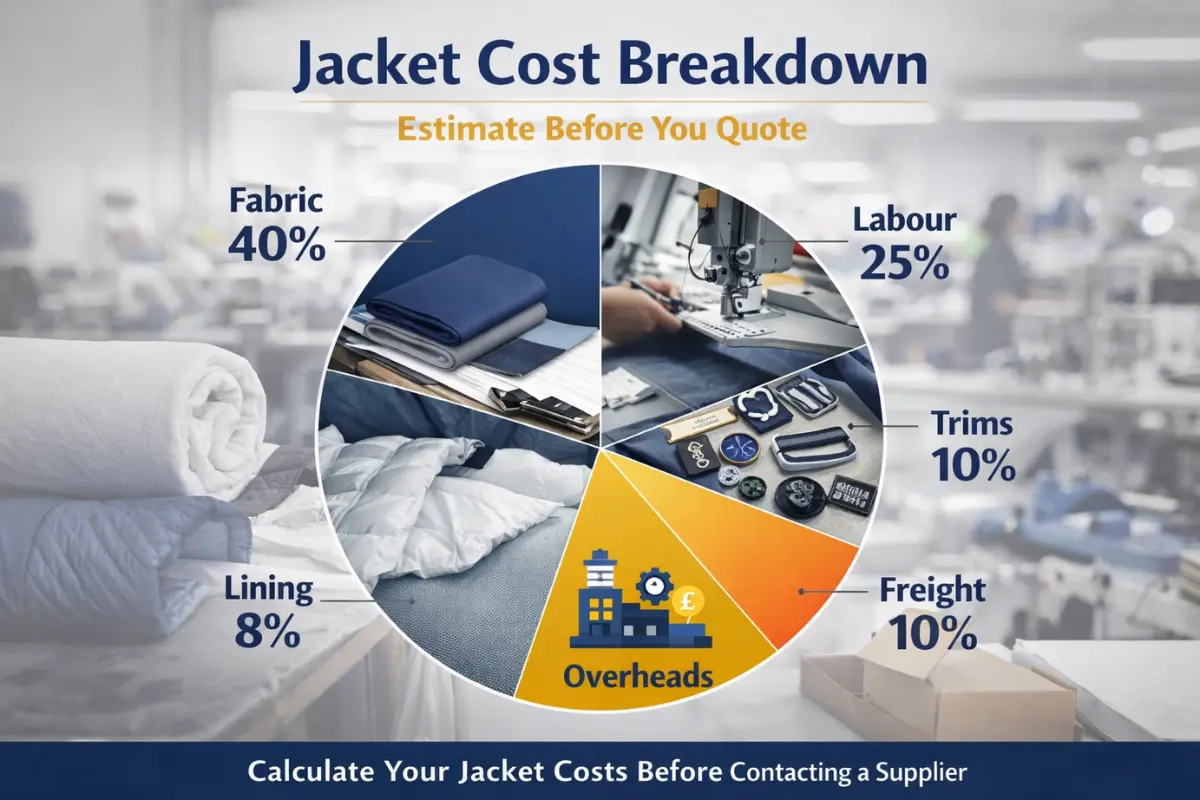
If you’re planning a new jacket collection or reviewing your current margins one of the smartest things you can do is calculate your numbers before speaking to any manufacturer.
Too many brands send tech packs, request prices, and then feel shocked when quotes come back higher than expected.
The reality is simple:
If you don’t understand how jacket production costing works, you can’t control your pricing, your margins, or your growth.
This guide explains jacket costing in clear, practical UK English based on how production is structured inside real factories so you can estimate your costs properly before contacting a supplier.
Why You Must Calculate Jacket Costing First
When brands ask:
- “How much does it cost to manufacture a jacket?”
- “What’s the average factory price per unit?”
- “Can I produce this jacket for £18?”
The honest answer is:
There is no fixed price.
Jacket manufacturing cost depends on many small decisions and those decisions add up quickly.
If you don’t calculate properly before approaching a supplier, you risk:
- Pricing your product too low
- Shrinking your margins
- Cutting quality to hit budget
- Losing money on your first production run
- Blaming the factory when the real issue was planning
Whether you are launching your first brand, changing manufacturers, or scaling production, understanding costing gives you control.
If you are still selecting suppliers, you may also find our guide on How to Choose a Reliable Jacket Manufacturer for Your Brand helpful alongside this one.
Step-by-Step: How Jacket Production Cost Is Calculated
Below is how jacket factories typically break down costing internally.
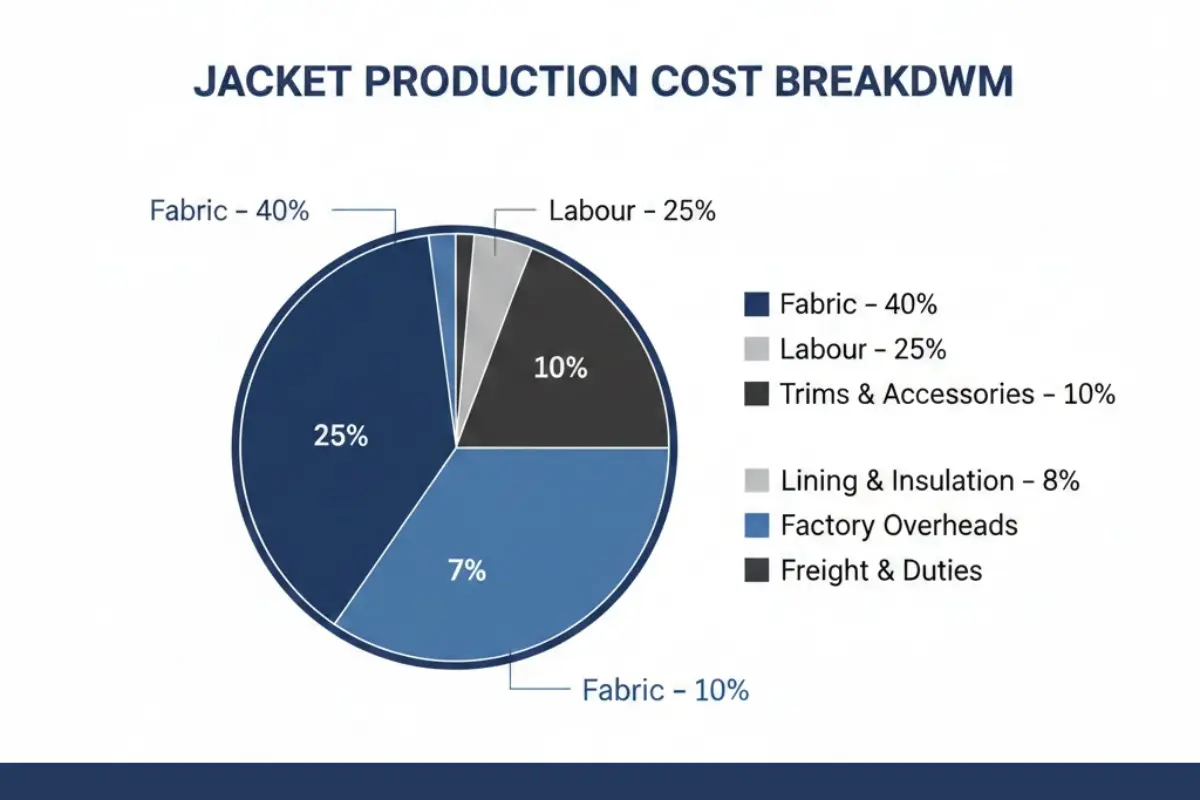
This is the same structure used in professional production planning.
1. Outer Fabric (Shell Material)
The fabric is usually the largest part of your cost.
The price depends on:
- Fabric type (polyester, nylon, softshell, PU, real leather, wool blend)
- Weight (GSM – grams per square metre)
- Waterproof or coated finishes
- Imported vs locally sourced material
- Minimum fabric order requirements
For example:
- A basic polyester shell is far cheaper than a technical waterproof fabric.
- Real leather varies significantly depending on grade.
- Breathable membranes or DWR coatings increase cost.
- Heavier fabrics mean higher material usage.
Factories calculate how many metres are needed per jacket plus extra for wastage. Depending on design complexity, wastage can be 5-12%.
That extra percentage is often forgotten by brands calculating at home.
2. Lining & Insulation
Many brands underestimate this section.
Costs vary depending on:
- Standard polyester lining
- Quilted lining
- Padded insulation
- Down filling
- Removable inner layers
A lightweight fashion jacket and a heavy winter parka are completely different in terms of internal construction cost.
Insulation alone can double the material cost in some designs.
3. Trims & Accessories
These small details add up quickly:
- Zips (standard vs branded)
- Buttons and snap fasteners
- Velcro
- Drawcords
- Rib cuffs
- Woven labels
- Printed care labels
- Custom packaging
For example:
A standard zip may cost a fraction of a branded metal zip. Multiply that difference across 1,000 units and it becomes significant. This is where many budget calculations go wrong.
4. Labour & Stitching Cost
Labour depends on how complicated your jacket is.
Factories calculate labour based on production time per piece.
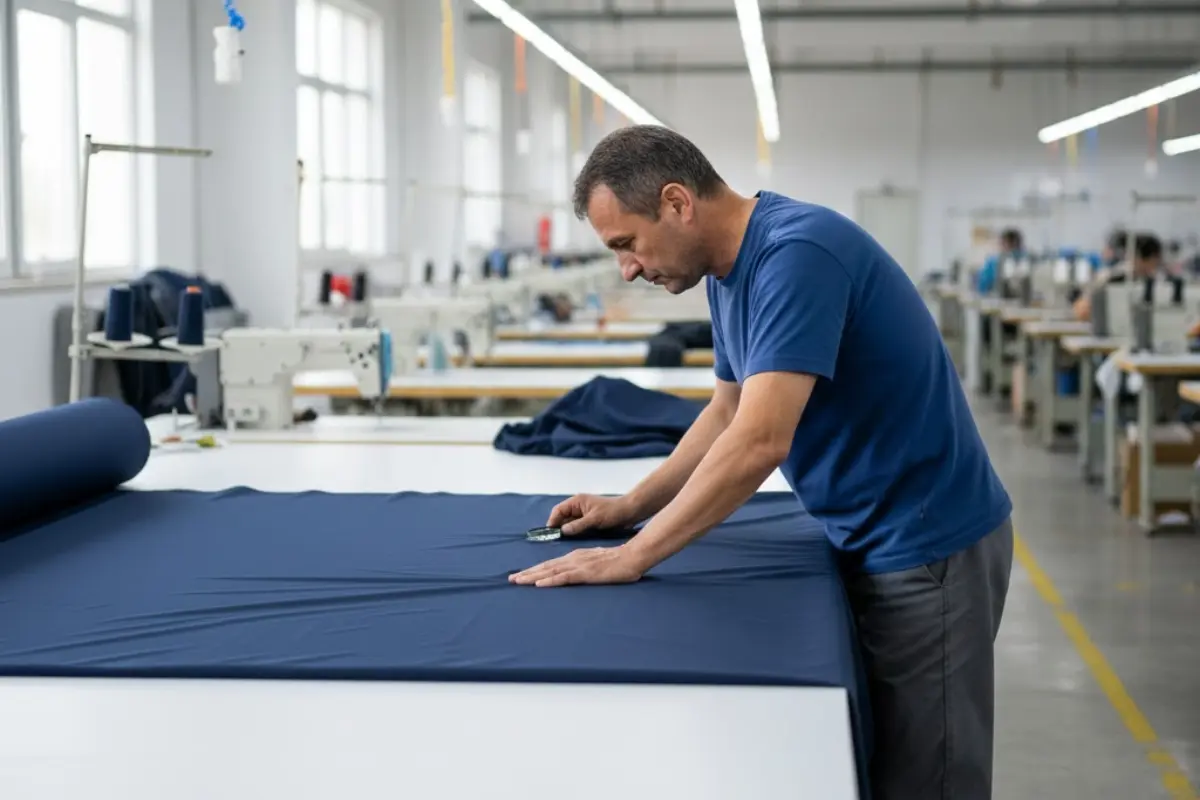
Factors affecting labour cost include:
- Number of panels
- Pocket construction
- Inner and outer stitching
- Embroidery or printing
- Waterproof seam taping
- Quality control time
A simple bomber jacket requires far less time than a fully taped waterproof technical jacket.
More stitching detail = more labour cost.
5. Pattern Development & Sampling
Before bulk production begins, you normally have:
- Pattern creation
- Size grading
- Prototype sample
- Fit adjustments
- Pre-production sample
Even if a factory absorbs some sampling cost into bulk, you should still budget for it in your planning.
Skipping this calculation can distort your real margin.
6. Factory Overheads
This is the part many brands never consider.
Factories must account for:
- Electricity
- Machinery maintenance
- Cutting wastage
- Quality inspection staff
- Planning and coordination
- Rejection buffer (defective allowance)
When a quote seems higher than expected, it’s often because proper overhead calculation has been included.
Low quotes sometimes mean corners are being cut.
Hidden Costs Brands Often Forget
This is where most costing mistakes happen.
1. Low Quantity Production
Smaller orders increase per-unit cost because:
- Fabric purchasing becomes less efficient
- Production lines are underutilised
- Set-up costs are spread across fewer pieces
We explain this in detail in How Bulk Order Quantities Affect Jacket Manufacturing Costs.
2. Shipping & Freight
Air freight is fast but expensive.
Sea freight is cheaper but requires planning.
Failing to factor freight properly can destroy margins.
3. Import Duties & VAT
For UK brands especially, duty rates must be checked correctly.
Ignoring this can turn a profitable product into a loss.
4. Currency Fluctuations
If you are producing overseas, exchange rates matter.
A small shift in currency can change your final landed cost.
5. Compliance & Testing
Waterproof jackets, protective garments, and technical products may require testing and certification.
That cost must be factored in early.
If you are sourcing internationally, you may also want to review How to Structure Secure International Payments for Bulk Production to avoid financial risks.
Simple Jacket Costing Formula (Practical Version)
Before contacting a supplier, use this structure:
Estimated Unit Cost =
Fabric
- Lining & Insulation
- Trims
- Labour
- Sampling allocation
- 5–10% overhead buffer
- Freight estimate
- Import duties
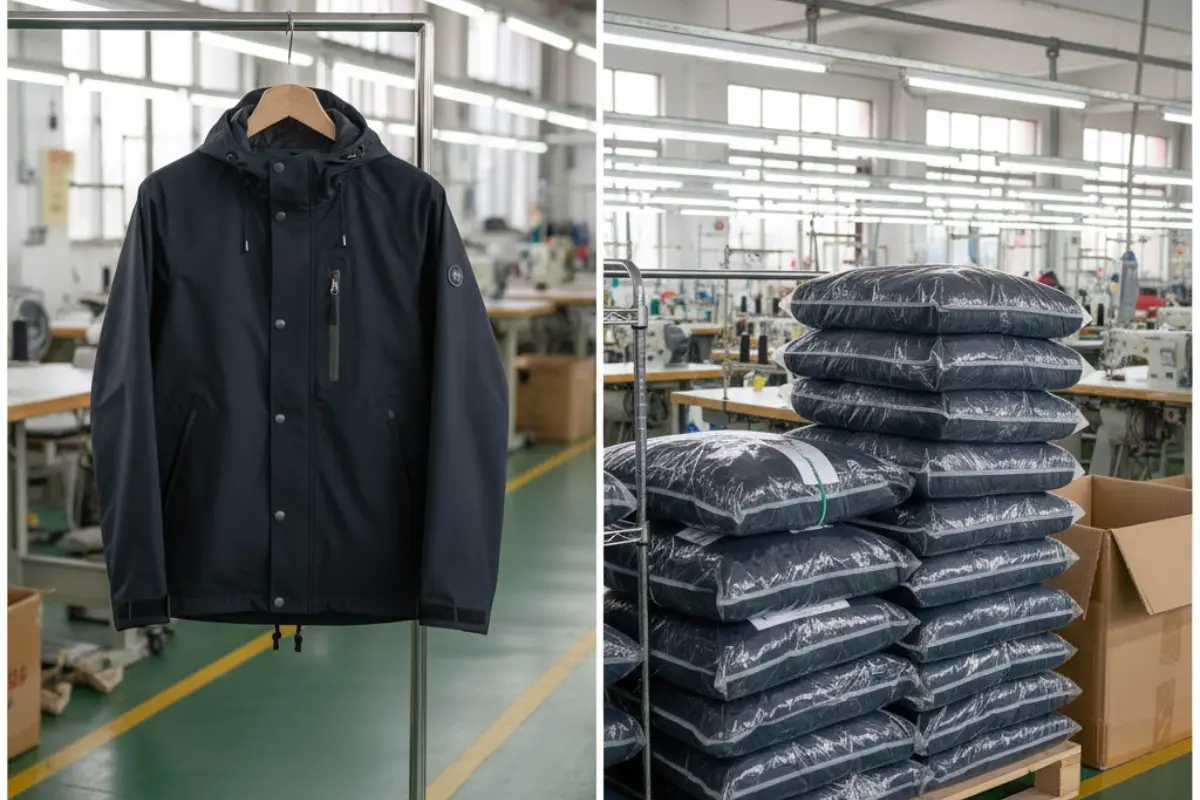
Then calculate:
- Wholesale price
- Retail price
- Target margin
If the numbers don’t work at this stage, negotiating harder with a factory will not fix the issue.
Cost structure must work first.
Why This Matters at Different Stages of Growth
If You’re a New Brand
Proper costing protects your launch budget and prevents unrealistic expectations.
If You’re Already Manufacturing But Facing Margin Issues
Reviewing your cost breakdown often reveals where money is being lost.
You may also benefit from reviewing Avoid These Mistakes When Sourcing Jackets Overseas if supplier issues are affecting your profitability.
If You’re Scaling and Adding Manufacturers
Clear costing allows you to benchmark suppliers properly.
If you’re expanding production capacity, you may find our guide on How to Scale Your Apparel Brand With a Direct OEM Jacket Manufacturer helpful as well.
A Practical Insight From Real Production
In jacket manufacturing, cost differences rarely come from one large change.
They come from many small decisions:
- Slightly heavier fabric
- Branded zip upgrade
- Extra pocket
- Faster delivery request
- Lower quantity
- More complex stitching
Each small choice increases cost.
Understanding this helps you design smarter and negotiate better.
Before You Contact Any Manufacturer
Ask yourself:
- What is my target retail price?
- What margin do I need?
- What is my realistic production budget?
- What is my minimum viable order quantity?
- Have I included shipping and duties?
When you approach production with clear numbers, conversations become structured and professional, not price-driven.
Compare Your Costing With Real Production Numbers
If you have already estimated your jacket costing and would like to compare it with a structured production breakdown, we can assist.
You can:
- Request a sample evaluation
- Share your tech pack for cost review
- Discuss production planning before bulk commitment
Our production team works with brands at different growth stages from first-time launches to established labels scaling internationally.
If you would like to assess craftsmanship and cost structure before placing a full order, you’re welcome to request a sample and review our production standards.
Clear numbers create confident production decisions.
And confident decisions build stronger brands.