

Introduction
Minimum Order Quantity (MOQ) is one of the most important concepts clothing brands must understand when working with jacket manufacturers.
Whether you are launching a new apparel brand or expanding your existing product line, MOQ requirements often play a key role in production planning. Many brands encounter this term early in discussions with manufacturers, yet the reasons behind it are not always clearly explained.
In reality, minimum order quantities are closely connected to how garment manufacturing works. From fabric sourcing and trims procurement to production line setup, several factors influence why manufacturers establish MOQ requirements.
Understanding these factors can help brands plan their production strategy more effectively and avoid unnecessary delays or cost surprises during the manufacturing process.
What Is MOQ in Jacket Manufacturing?
Minimum Order Quantity (MOQ) in jacket manufacturing refers to the minimum number of units a manufacturer requires to produce a specific jacket design or style.
MOQs exist because garment production involves multiple coordinated processes, including fabric procurement, trims sourcing, labor allocation, and production line setup. Producing extremely small quantities often disrupts production efficiency and increases costs for both the manufacturer and the brand.
By establishing a minimum order quantity, manufacturers ensure that production can run efficiently while maintaining consistent quality standards.
Each order requires coordination between several stages, including:
- pattern development and size grading
- fabric sourcing and cutting preparation
- trims and accessories procurement
- stitching and assembly processes
- quality control and finishing
Because these steps involve setup time and material planning, producing extremely small quantities can disrupt production efficiency and significantly increase costs.
Minimum order quantities help manufacturers organize their production schedules while maintaining stable quality and cost control. Before proceeding we recommend you to read this guide, “How to choose a reliable jackets manufacturer for your brand ”
Why Jacket Manufacturers Set Minimum Order Quantities
Minimum order quantities exist because of several practical realities involved in garment production.
1: Fabric Procurement
Most fabric mills supply materials in minimum yardage quantities. When producing jackets, manufacturers must order enough fabric to meet these requirements.
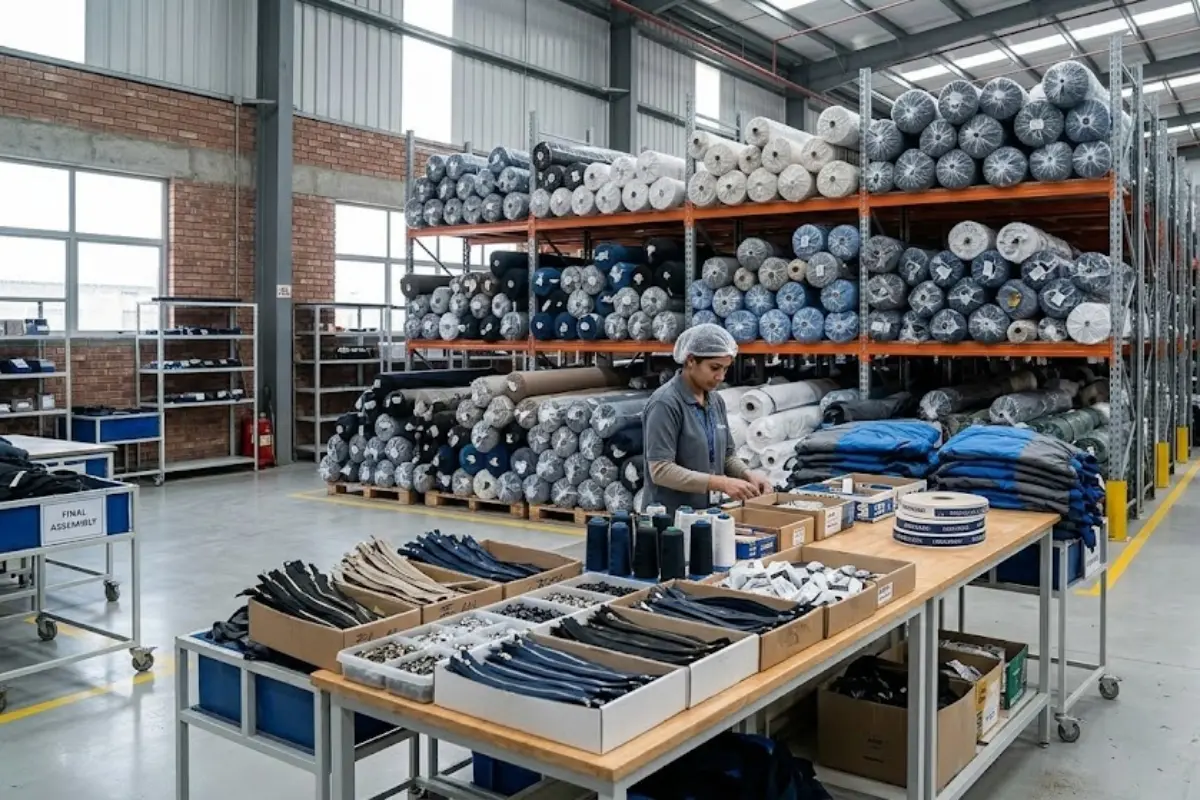
If an order is too small, sourcing the fabric may become inefficient or considerably more expensive.
2: Production Line Efficiency
Jacket production usually runs through organized production lines where each worker performs a specialized task. Setting up a line requires preparation, machine adjustments, and workflow planning.
Running a full production setup for only a few units would disrupt the factory’s overall production schedule.
Minimum order quantities allow manufacturers to maintain efficient production operations.
3: Trims and Accessories
Jackets typically include multiple components such as:
- zippers
- snaps or buttons
- lining materials
- woven labels
- brand tags
Suppliers of these trims often operate with their own minimum order requirements. These supply chain factors also influence the overall MOQ for jacket manufacturing.
Do MOQs Differ Between Jacket Types?
Yes, minimum order quantities often vary depending on the type of jacket being produced.
Different jacket styles require different materials, construction methods, and production processes.
For example:
- Leather jackets require specialized materials and skilled stitching techniques.
- Puffer jackets involve insulation materials and quilting processes that affect fabric usage.
- Varsity jackets combine multiple materials such as wool bodies and leather sleeves, increasing sourcing complexity.
Softshell or technical jackets may require specialized fabrics, waterproof treatments, or seam sealing.
Because of these variations, manufacturers may adjust MOQ requirements based on the design complexity and materials involved.
How New Brands Can Manage MOQ Requirements
For emerging clothing brands, minimum order quantities can initially appear challenging. However, several practical strategies can help manage these requirements effectively.
One approach is to focus on fewer designs during the initial production run. Launching a small collection with strong products often works better than producing many styles in small quantities.
Another useful strategy is to increase units per style while limiting color variations. This allows brands to meet production requirements without creating unnecessary inventory complexity.
Many successful brands also begin by testing the market with a small but focused product range, refining their designs after receiving customer feedback before expanding their collections.
With careful planning, MOQ requirements can be incorporated into a brand’s growth strategy rather than becoming a barrier.
When Higher MOQs Actually Reduce Production Costs
Although higher order quantities may seem demanding at first, they often lead to lower per-unit production costs.
When production volumes increase, several efficiencies become possible:
- bulk fabric purchasing can reduce material costs
- production lines operate more smoothly
- labor allocation becomes more efficient
- shipping and logistics can be optimized
For growing brands, increasing production volumes strategically can significantly improve profit margins over time.
What Brands Should Discuss With Manufacturers Before Confirming MOQ
Before confirming production quantities with a manufacturer, brands should clarify several important details to avoid misunderstandings later in the process.
Key topics to discuss include:
- fabric availability and sourcing timelines
- size grading and full size range requirements
- color variations and dye lot consistency
- sampling and pre-production approval procedures
- estimated production timelines
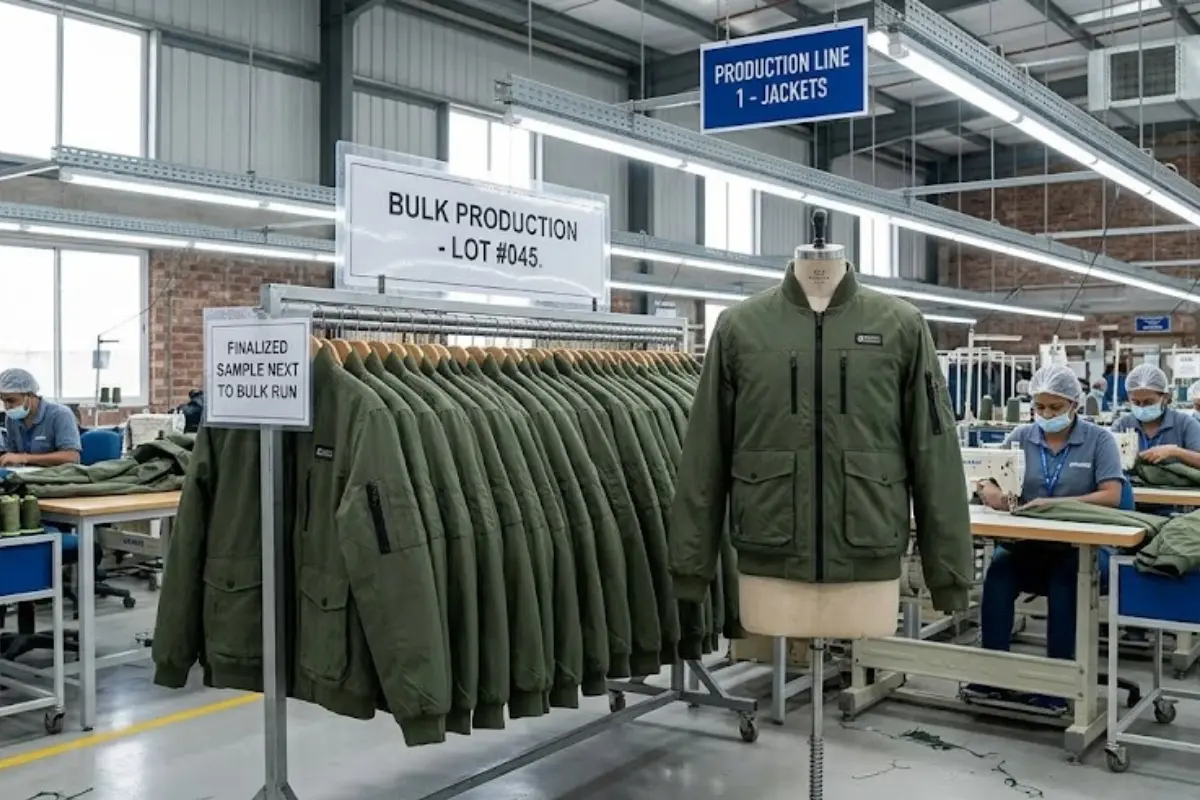
Clear communication during this stage helps ensure that both the brand and the manufacturer are aligned before bulk production begins.
Industry Insight
In jacket manufacturing, samples are often produced more slowly and carefully by experienced technicians. Bulk production, however, runs on structured production lines operating at industrial speed.
Because of this difference, brands should always confirm production specifications and quality expectations clearly before approving bulk manufacturing.
This small step helps prevent inconsistencies between the approved sample and the final production batch.
Conclusion
Minimum order quantities are a normal part of garment manufacturing and exist to ensure efficient production, stable supply chains, and consistent quality.
Rather than viewing MOQs as a limitation, clothing brands can approach them as an important element of production planning. When brands understand how manufacturing processes work from fabric sourcing to production scheduling they can make more informed decisions and build stronger relationships with their suppliers.
With the right preparation and communication, MOQ requirements become much easier to manage and often contribute to more efficient and cost-effective production in the long run.
Frequently Asked Questions About Jacket Manufacturing MOQ
What is the typical MOQ for jacket manufacturing?
MOQ levels vary depending on jacket style, materials, and production complexity. Many manufacturers set minimum quantities per design or per color to ensure efficient production and material sourcing.
Can new clothing brands work with manufacturers if they have small quantities?
Some manufacturers may accommodate smaller production runs depending on the design, material availability, and long-term partnership potential. However, most factories still require a minimum order level to maintain production efficiency.
Does MOQ affect production costs?
Yes. Larger production quantities usually reduce the per-unit cost because materials, labor, and manufacturing processes can be optimized for efficiency.
Considering Jacket Manufacturing for Your Brand?
If you are planning to manufacture custom jackets for your clothing brand, understanding production requirements early can make the entire process much smoother.
At Sialkot Jackets Star, we work with international brands to develop custom jackets through structured sampling, clear production planning, and transparent manufacturing processes.
If you would like to evaluate the craftsmanship before moving toward bulk production, you can also request a sample or explore our manufacturing capabilities to better understand how we support growing apparel brands.