

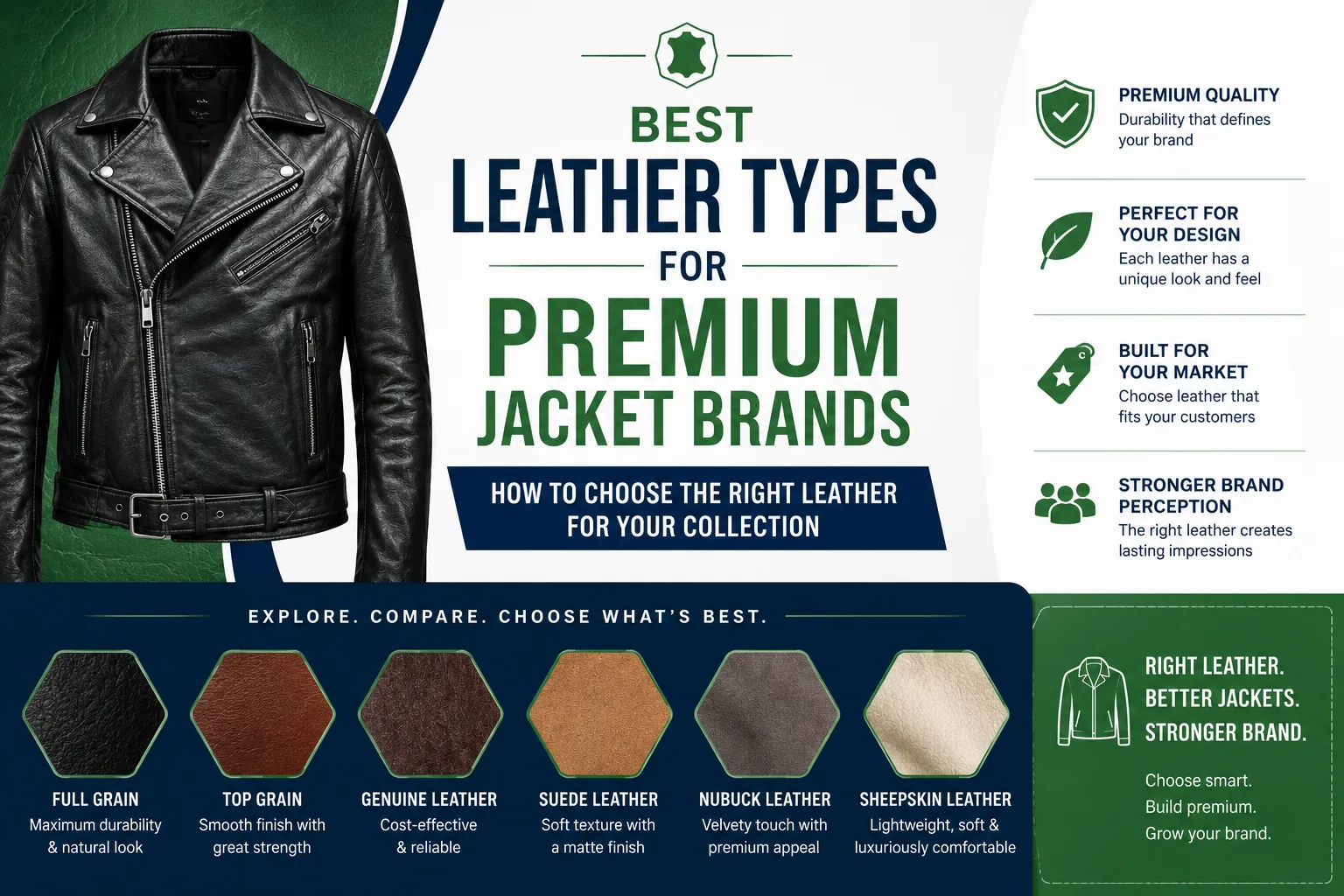
When building a premium leather jacket brand, your design isn’t the only factor that influences how customers perceive your products.
The leather you choose plays an even bigger role.
It determines how your jackets feel, how they age over time, how customers describe your products, and whether they believe your pricing reflects the value they’re receiving.
Yet many growing brands make the mistake of selecting leather based primarily on manufacturing cost.
While controlling production costs is important, choosing the wrong leather can affect far more than your profit margin. It can influence customer satisfaction, product reviews, repeat purchases, and the reputation your brand builds in the market.
Think about it from your customer’s perspective.
When someone invests in a premium leather jacket, they aren’t simply buying outerwear. They’re purchasing quality, craftsmanship, durability, and an experience that justifies the price they’ve paid.
If the leather feels stiff when they expect softness, scratches easily when they expect durability, or doesn’t match the premium image your marketing promises, they’ll remember the disappointment long after the purchase.
That’s why choosing the right leather isn’t simply a manufacturing decision.
It’s a branding decision.
It’s a pricing decision.
And ultimately, it’s a customer experience decision.
In this guide, you’ll learn how different leather types influence your brand positioning, the experience your customers will have, the type of market each leather is best suited for, and how to make a smarter material choice before moving into production.
Before Choosing Leather, Think About the Brand You’re Building
One of the first questions many buyers ask is:
“Which leather is the best?”
The better question is:
“Which leather is best for my brand?”
There isn’t a single leather that’s perfect for every business.
The right choice depends on the products you want to sell, the customers you want to attract, and the position you want your brand to occupy in the market.
Before discussing leather types, take a step back and define what you want customers to think when they see or wear your jackets.
Do you want your brand to be known for luxury fashion?
Do you want to appeal to motorcycle riders looking for protection and durability?
Are you building a premium lifestyle brand focused on everyday comfort?
Or are you creating rugged outdoor apparel that emphasizes toughness and longevity?
Your answers should guide your material selection.
The table below illustrates how different brand goals influence leather selection.
| Your Brand Goal | What Your Customers Expect | Your Leather Choice Should Support |
| Luxury fashion | Softness, elegance and premium feel | High-end leather with a refined finish |
| Motorcycle apparel | Durability, protection and performance | Strong, abrasion-resistant leather |
| Lifestyle fashion | Everyday comfort with premium quality | Balanced comfort and durability |
| Heritage or outdoor brand | Rugged appearance and long-lasting performance | Thick, durable leather with natural character |
| Premium winter collection | Warmth, softness and comfort | Leather suitable for cold-weather products |
When your material selection aligns with your brand identity, your products feel more authentic, your pricing becomes easier to justify, and customers develop greater confidence in your brand.
Which Leather Is Right for Your Brand?
Instead of looking at leather only from a manufacturing perspective, consider how each option affects your business.
Different leather types create different customer experiences, support different retail price points, and position your brand in different ways.
Here’s a high-level comparison to help you evaluate your options.
| Leather Type | Brand Positioning | Customer Experience | Relative Manufacturing Cost* | Best Suited For |
| Lambskin | Luxury and premium fashion | Extremely soft, lightweight and refined | High | Designer brands, boutiques and premium fashion collections |
| Cowhide | Premium durability | Strong, structured and highly durable | Medium to High | Motorcycle jackets, workwear-inspired collections and rugged fashion |
| Goatskin | Premium everyday wear | Comfortable, flexible and durable | Medium | Lifestyle brands, fashion collections and versatile outerwear |
| Buffalo Leather | Rugged premium | Heavy-duty feel with distinctive texture | Medium to High | Heritage brands, outdoor collections and durable outerwear |
| Sheepskin | Luxury winter apparel | Soft, warm and exceptionally comfortable | High | Winter collections and premium cold-weather products |
*Manufacturing costs vary depending on leather grade, sourcing, finish, order quantity, and market conditions.
The best leather isn’t necessarily the most expensive one.
It’s the one that supports your target market, pricing strategy, and long-term brand vision.
Lambskin Leather: If You Want Customers to Experience Luxury
If your goal is to build a premium fashion brand, lambskin is often one of the strongest choices available.
Unlike heavier leathers, lambskin is known for its exceptionally soft texture and lightweight feel.
Customers often notice the difference the moment they put the jacket on.
That’s one of the reasons luxury fashion brands continue to use lambskin in many of their premium collections.
How Your Customers Are Likely to Perceive It
When customers wear a well-made lambskin jacket, they often associate it with:
- Premium quality.
- Sophisticated styling.
- Exceptional comfort.
- Lightweight wearability.
- Luxury craftsmanship.
These qualities help create a memorable first impression, which can influence purchasing decisions and encourage repeat business.
What Does Lambskin Say About Your Brand?
Your material selection communicates your brand positioning before customers even read the product description.
Choosing lambskin tells buyers that your business prioritizes:
- Premium craftsmanship.
- Luxury product development.
- Attention to detail.
- Fashion-forward collections.
- Customer comfort.
This makes lambskin particularly suitable for brands targeting boutiques, fashion retailers, luxury online stores, and customers willing to invest in premium apparel.
Can You Charge Higher Retail Prices?
Generally, yes.
Premium materials often allow brands to position their products in higher-value market segments.
However, customers are willing to pay higher prices only when the entire product delivers a premium experience.
That includes:
- Excellent craftsmanship.
- High-quality hardware.
- Professional finishing.
- Consistent sizing.
- Premium branding and packaging.
The leather alone doesn’t justify the price.
The complete customer experience does.
Is Lambskin the Right Choice for Your Brand?
The table below can help you decide.
| Lambskin Is an Excellent Choice If… | It May Not Be the Best Choice If… |
| You’re building a premium fashion brand. | Your products are designed primarily for heavy-duty riding applications. |
| Your customers prioritize luxury and comfort. | Your primary focus is maximum abrasion resistance. |
| You want to position your products in higher retail price segments. | You’re targeting highly price-sensitive market segments. |
| Your collection emphasizes style and premium craftsmanship. | Your products require extremely rugged performance. |
If your goal is to create jackets that immediately communicate sophistication and premium quality, lambskin can become one of the strongest foundations for your collection.
In the next section, we’ll explore how cowhide, goatskin, buffalo leather, and sheepskin compare and which of these materials may be the better choice depending on your target customers, brand positioning, and long-term business goals.
Cowhide Leather: When Durability Defines Your Brand
If your customers expect strength, durability, and long-term performance, cowhide is one of the most trusted choices for leather jacket manufacturing.
Unlike lambskin, which is known for its soft and luxurious feel, cowhide offers a more structured appearance and excellent resistance to everyday wear. That’s why it has remained a preferred material for motorcycle apparel, workwear-inspired fashion, and rugged lifestyle brands.
How Your Customers Are Likely to Perceive It
Customers often associate cowhide jackets with:
- Long-lasting durability.
- Premium craftsmanship.
- Protection and reliability.
- A timeless, rugged appearance.
For customers who value performance as much as style, these qualities can significantly influence their purchasing decisions.
What Does Cowhide Say About Your Brand?
Choosing cowhide positions your brand as one that values quality, functionality, and long-term performance.
It’s particularly well suited for:
- Motorcycle apparel brands.
- Heritage-inspired collections.
- Outdoor lifestyle brands.
- Premium everyday outerwear.
Can You Charge Higher Retail Prices?
Yes especially when your target audience values durability over lightweight comfort.
Customers purchasing premium motorcycles or rugged leather jackets often expect to invest more in products built to last. High-quality construction, durable hardware, and attention to detail further strengthen that value proposition.
| Cowhide Is an Excellent Choice If… | It May Not Be the Best Choice If… |
| You sell motorcycle jackets. | Your focus is ultra-lightweight fashion jackets. |
| Durability is a key selling point. | Your customers prioritize an exceptionally soft feel. |
| You want a structured, rugged appearance. | Your collection emphasizes delicate luxury styling. |
Goatskin Leather: The Ideal Balance Between Comfort and Durability
Some brands don’t want to choose between softness and strength.
They want both.
That’s where goatskin becomes an excellent option.
Goatskin offers a combination of flexibility, durability, and comfort that makes it suitable for a wide range of premium leather jackets.
How Your Customers Are Likely to Perceive It
Customers appreciate goatskin because it offers:
- Comfortable everyday wear.
- Good flexibility.
- Premium appearance.
- Reliable durability.
This balance makes goatskin appealing to customers looking for versatile jackets they can wear regularly.
What Does Goatskin Say About Your Brand?
Choosing goatskin communicates that your brand values practicality without compromising quality.
It’s a strong choice for:
- Premium lifestyle brands.
- Contemporary fashion collections.
- Retailers serving diverse customer preferences.
Brands looking for versatility often find goatskin to be a reliable material for multiple jacket styles.
Buffalo Leather: Build a Rugged Brand Identity
If your goal is to create products that emphasize toughness and character, buffalo leather deserves serious consideration.
Its natural grain and heavier feel give jackets a distinctive appearance that appeals to customers seeking authenticity rather than refined luxury.
How Your Customers Are Likely to Perceive It
Buffalo leather is commonly associated with:
- Strength.
- Rugged craftsmanship.
- Long-lasting durability.
- A bold visual character.
These qualities make it particularly attractive to heritage-inspired and outdoor-focused brands.
What Does Buffalo Leather Say About Your Brand?
Using buffalo leather positions your business as one that produces durable products with a strong visual identity.
It’s particularly suitable for:
- Heritage collections.
- Outdoor apparel brands.
- Rugged lifestyle products.
- Vintage-inspired designs.
Customers looking for robust leather jackets often appreciate the unique texture and substantial feel that buffalo leather provides.
Sheepskin Leather: When Comfort Becomes Your Competitive Advantage
If your collection is designed for colder climates or premium winter fashion, sheepskin offers an entirely different customer experience.
Its natural warmth and soft texture make it a preferred choice for winter outerwear where comfort is just as important as appearance.
How Your Customers Are Likely to Perceive It
Customers often associate sheepskin with:
- Warmth.
- Comfort.
- Luxury winter fashion.
- Premium craftsmanship.
These qualities help create a premium seasonal product that stands out in colder markets.
What Does Sheepskin Say About Your Brand?
Choosing sheepskin tells customers your brand focuses on premium winter apparel and superior wearing comfort.
It works particularly well for brands serving customers in regions where cold-weather outerwear is an essential part of their wardrobe.
Mistake #1: Choosing Leather Based Only on Manufacturing Cost
One of the biggest mistakes growing brands make is selecting leather solely because it lowers manufacturing costs.
While controlling your budget is important, focusing only on cost can create challenges that affect your business long after production has finished.
For example, lower-grade materials may reduce the perceived value of your products, making it more difficult to justify premium retail prices.
They may also affect customer satisfaction if the leather doesn’t deliver the comfort, durability, or appearance buyers expect.
Instead of asking:
“Which leather costs the least?”
Ask yourself:
“Which leather will help my customers feel confident about buying from my brand again?”
That’s the question that supports long-term growth.
Which Leather Best Supports Your Brand?
There’s no universal answer.
The right leather depends on the market you’re targeting and the experience you want your customers to have.
The comparison below can help simplify your decision.
| If Your Goal Is… | Recommended Leather |
| Build a luxury fashion brand | Lambskin |
| Manufacture premium motorcycle jackets | Cowhide |
| Create versatile lifestyle products | Goatskin |
| Develop rugged heritage collections | Buffalo Leather |
| Launch premium winter outerwear | Sheepskin |
Rather than selecting leather based on trends, choose the material that aligns with your brand positioning and customer expectations.
Your Leather Choice Directly Shapes Customer Experience
Every material decision influences how customers perceive your products after they receive them.
Here’s how those choices translate into business outcomes.
| Leather Choice Influences | Impact on Your Business |
| Comfort | Higher customer satisfaction and stronger first impressions. |
| Durability | Fewer complaints and greater long-term value. |
| Appearance | Stronger premium perception and improved retail positioning. |
| Weight | Better wearability for your intended market. |
| Texture | Reinforces your brand identity. |
| Overall quality | Encourages repeat purchases and positive word-of-mouth. |
These factors don’t just affect individual products they influence how customers remember your brand.
Need Help Choosing the Right Leather for Your Brand?
If you’re still deciding which leather best fits your collection, you don’t have to make that decision alone.
At Sialkot Jackets Star, we work with fashion brands, retailers, wholesalers, distributors, and private label businesses to help them select materials that align with their target market, pricing strategy, and product goals before production begins.
Whether you’re launching your first collection or expanding an existing product line, we can help you evaluate the right leather, develop production-ready samples, and manufacture jackets that reflect your brand’s quality standards.
If you’re still planning your private label journey, you may also find these guides helpful:
- Private Label Leather Jacket Manufacturing: From Design Concept to Bulk Production: Understand how your idea moves from concept to finished production.
- Custom Leather Jacket Manufacturing vs Ready-Made Wholesale Jackets: Which Is More Profitable? Compare sourcing models to determine which approach best supports your business.
- Top Questions to Ask Before Hiring a Leather Jacket Manufacturer: Learn how to evaluate manufacturing partners before placing your first bulk order.
Together, these resources will help you make more informed sourcing decisions before investing in production.
Frequently Asked Questions
There isn’t a single leather that’s best for every brand. Lambskin is often preferred for luxury fashion because of its softness and refined appearance, while cowhide is widely chosen for durability and motorcycle apparel. The right choice depends on your target customers, pricing strategy, and brand positioning.
High-quality cowhide and buffalo leather are generally known for their excellent durability. However, longevity also depends on leather grade, manufacturing quality, construction methods, and proper care.
Neither is universally better they serve different purposes. Lambskin offers a softer, more luxurious feel, making it ideal for premium fashion collections. Cowhide provides greater structure and durability, making it well suited for motorcycle and rugged lifestyle jackets.
Yes. Many brands combine different leather types across their product range to serve multiple customer segments. For example, you may offer lambskin jackets for luxury fashion customers while including cowhide styles for buyers seeking durability and performance.
Yes. An experienced OEM and private label manufacturer should help you evaluate leather options based on your target market, retail pricing, design goals, and intended product positioning before sampling and bulk production begin.
Final Thoughts
The leather you choose influences much more than the appearance of your jackets.
It shapes how customers experience your products, how they perceive your brand, and how confidently they justify paying your retail price.
Instead of selecting leather based only on manufacturing cost, choose materials that support your long-term business goals, reflect your brand identity, and meet the expectations of your target customers.
When your material selection aligns with your market positioning, you’re not simply manufacturing jackets you’re building a brand that customers recognize, trust, and return to.
If you’re ready to develop a premium leather jacket collection, working with an experienced OEM and private label manufacturing partner can help you choose the right materials, refine your designs, and confidently move from product development to bulk production.