


Complete Technical Breakdown for Buyers (600D-1000D Cordura Guide)
If you are importing or developing motorcycle jackets for your brand, one of the biggest challenges is this: everything looks good on paper, but the final product doesn’t perform the same in real use.
Suppliers often use terms like Cordura, 600D, CE armor and reinforced panels, but without a clear explanation, these terms don’t help you make a confident decision. This leads to:
- Inconsistent quality across batches
- Customer complaints after launch
- Returns and brand reputation damage
This guide explains everything in simple, practical language, while still giving you the technical clarity needed to evaluate suppliers properly. By the end, you will know exactly what to look for before placing a bulk order. If you’re comparing different motorcycle jacket styles for your market, you can explore our full range of motorbike jackets designed for touring, urban, and performance segments.
Outer Shell Fabric: The Base of the Entire Jacket
Think of the outer fabric as the “body” of the jacket. If this is weak or poorly made, no other feature can compensate for it.
600D vs 1000D – What It Actually Means
“Denier” (D) simply tells you how thick and strong the fabric thread is.
600D Fabric
- This is a balanced option. It is not too heavy and not too light. It works well for:
- City riders
- Casual use
- Mid-range product lines
1000D Fabric
- This is much stronger and thicker. It is designed for:
- Long-distance touring
- High-speed riding
- Premium product categories
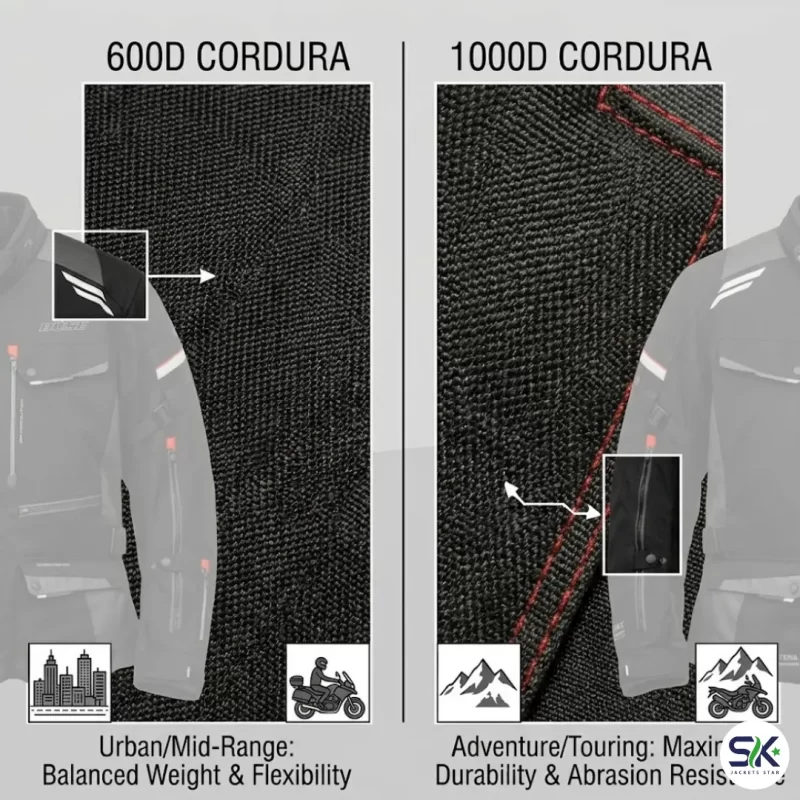
Simple way to understand:
The 600D is like a durable everyday jacket, while the 1000D is built for tougher conditions where safety and durability matter more.
Buyer Insight:
If your customers expect long-lasting products or ride in demanding conditions, using stronger fabric gives you a clear advantage over competitors. f you’re sourcing in bulk, it’s worth reviewing our motorbike jackets range to evaluate construction standards across multiple styles.
Cordura vs “Cordura-Style” Fabric
This is one of the most misunderstood areas in sourcing.
Original Cordura
- A branded, high-performance fabric known for excellent durability and abrasion resistance
Cordura-Style Polyester
- A general polyester fabric is made to look similar, but the quality depends heavily on how it is produced.
Real issue buyers face:
Two suppliers may both claim “Cordura,” but one jacket lasts years while the other fails quickly.
What you should do:
- Ask for fabric details (denier, composition)
- Request physical samples
- Compare weight, thickness, and texture
Fabric Coating – Why It Matters More Than You Think
Even strong fabric needs protection from the weather.
- DWR Coating: Helps water slide off instead of soaking in
- PU Coating: Adds an extra barrier against wind and moisture
Simple explanation:
Without coating, the fabric behaves like a sponge in the rain. With coating, it repels water and stays comfortable.
Buyer Insight:
Customers don’t just judge a jacket on durability they judge it on comfort in real conditions.
Reinforcement Panels – Where Real Quality Shows
A motorcycle jacket doesn’t need equal strength everywhere. It needs extra strength in the right places. If your focus is on high-abrasion performance products, you can explore our Cordura jackets range built specifically for durability-focused markets.
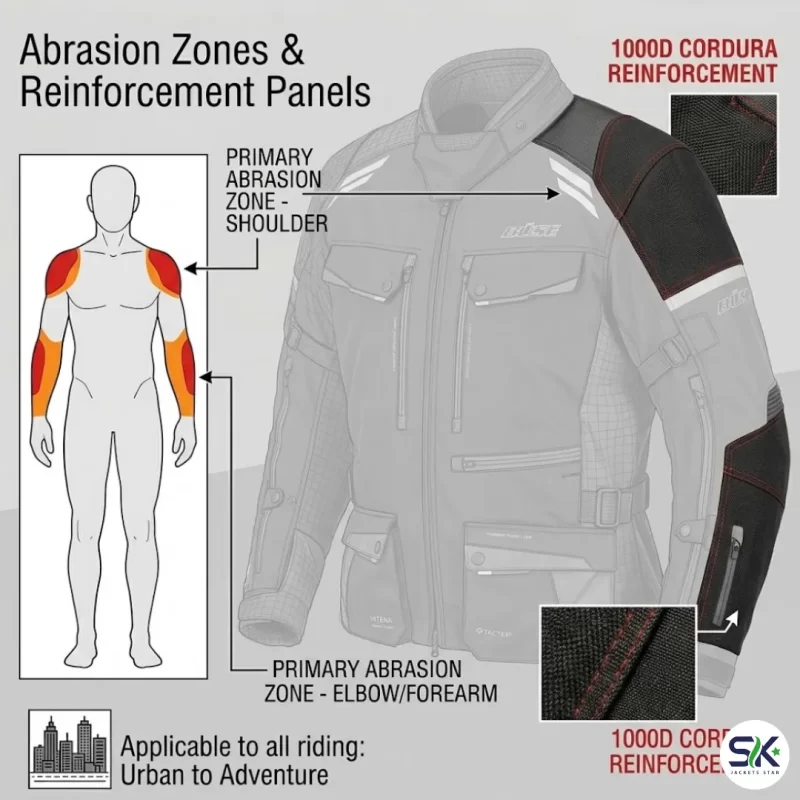
High-Impact Areas
These areas need reinforcement because they take the most damage:
- Shoulders
- Elbows
- Forearms
- Lower front body
How Good Jackets Are Built
High-quality jackets are used:
- Extra fabric layers in key zones
- Separate panels designed for strength
- Strong stitching to hold everything together
Simple analogy:
It’s like adding extra protection only where it’s needed most, instead of making the entire jacket heavy.
Why Low-Quality Jackets Fail
To reduce cost, some manufacturers:
- Skip reinforcement panels
- Use single-layer fabric
- Don’t strengthen seams properly
Buyer Insight:
This is why some jackets look good initially but fail after limited use.
Stitching – The Detail That Holds Everything Together
Most buyers focus on fabric, but stitching is what keeps the jacket intact.
Important Stitching Types
- Double stitching: Adds strength to seams
- Bartack stitching: Reinforces small but critical areas
- Lockstitch: Prevents seams from opening
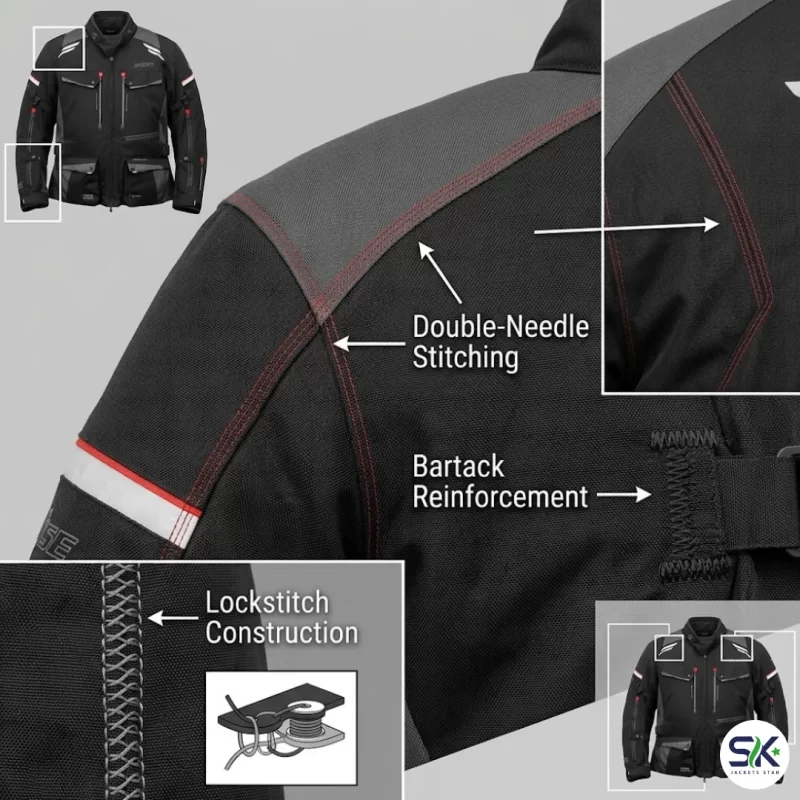
Why Thread Quality Matters
- Strong thread (bonded nylon) lasts longer
- Weak thread breaks under stress, even if the fabric is strong
Areas You Should Always Check
- Pocket corners
- Armor pocket openings
- Adjustment straps
Buyer Insight:
Many product failures happen because of weak stitching, not weak fabric.
Protection System – Understanding Safety Without Confusion
Motorcycle jackets are not just fashion products they are safety products.
Where Protection Is Added
A proper jacket includes compartments for:
- Shoulder protection
- Elbow protection
- Back protection
CE Levels Made Simple
- Level 1: Basic protection
- Level 2: Higher protection, absorbs more impact
Important Difference Buyers Must Know
- Armor Ready: Jacket has pockets for armor
- Fully Certified: Jacket meets official safety standards
Buyer Insight:
If you are selling in Europe or the UK, this difference directly affects whether your product meets market expectations.
Ventilation – Why Comfort Sells Products
Riders often wear jackets for long hours. Without airflow, the jacket becomes uncomfortable.
How Ventilation Should Work
- Air enters from the front vents
- Air exits from the back vents
What Good Jackets Do Differently
- Use mesh lining inside
- Create airflow paths through the jacket
Why Some Jackets Feel Too Hot
- Vents are placed incorrectly
- No internal airflow system
Buyer Insight:
Comfort is one of the main reasons customers leave positive or negative reviews.
Weather Protection – Beyond Basic Fabric
A good motorcycle jacket should handle different weather conditions.
Water Protection
- Water-resistant fabric handles light rain
- Waterproof systems offer stronger protection
Wind Protection
- The internal flap behind the zipper blocks the wind
- High collar protects the neck area
All-Season Use
- Removable thermal liner for cold weather
- Breathable structure for warm weather
Buyer Insight:
Products that work in multiple seasons have higher demand and better resale potential.
Functionality – What Riders Actually Use
Features should not just look good they should be practical.
Pocket Design
- Easy-access chest pockets
- Large storage pockets
- Secure inner pockets
Fit and Comfort
- Sleeves shaped for the riding position
- Flexible panels for movement
Adjustment Options
- Waist straps for a bett er fit
- Arm adjusters to keep armor in place
- Cuff adjustments for gloves
Buyer Insight:
Better usability leads to better customer satisfaction and repeat sales.
Zippers and Small Details – Where Many Products Fail
Zipper Quality
- Reliable zippers last longer and reduce complaints
- Cheap zippers are one of the biggest causes of returns
Visibility Features
- Reflective strips improve safety at night
- Also, add design value
Branding Options
- Logos and labels
- Custom trims
- Packaging
Internal Linking Suggestion:
Link to your Private Label Jacket Manufacturing page.
Common Mistakes Buyers Make
- Focusing only on price
- Not asking detailed questions about materials
- Ignoring reinforcement and stitching
- Skipping sample testing
- Not discussing target market requirements
Simple Checklist to Evaluate a Supplier
Before placing a bulk order, make sure:
- Fabric details are clear and verifiable
- Reinforcement is present in key areas
- Stitching is strong and consistent
- The ventilation system is functional
- Customization options are available
- Communication is clear and professional
Conclusion
A high-quality motorcycle jacket is not created by one feature alone. It is the result of multiple elements working together—fabric, stitching, protection, comfort, and design.
For buyers, understanding these basics in a clear way helps you:
- Avoid unreliable suppliers
- Maintain consistent product quality
- Build a product that customers trust
If you are planning to develop or source motorcycle jackets in bulk, it is important to work with a manufacturing partner who understands both technical construction and real market expectations.
You can connect with our team to:
- Review your product requirements
- Explore material and design options
- Request samples for evaluation
This helps ensure your production meets the standards your customers expect from the start.
Frequently Asked Questions (FAQs)
What is the best material for motorcycle jackets?
Strong polyester (600D–1000D) or Cordura is commonly used. Higher denier fabrics offer better durability and protection.
Is 600D fabric enough for motorcycle jackets?
Yes, for basic and mid-range products. For higher performance and durability, 1000D or reinforced panels are recommended.
Are all jackets with armor safe?
Not necessarily. Some are only “armor ready,” meaning they have pockets. Fully certified jackets meet official safety standards.
Why do some jackets fail quickly?
Usually due to:
- Weak stitching
- Low-quality fabric
- Missing reinforcement panels
What should I check before placing a bulk order?
Always check:
- Fabric quality
- Stitching strength
- Reinforcement areas
- Zipper quality
- Overall construction
Do ventilation systems really matter?
Yes. Without proper airflow, jackets become uncomfortable, especially in warm conditions.
How can I avoid supplier issues?
- Request samples
- Ask clear technical questions
- Work with manufacturers who explain specifications clearly
One thought on “What Makes a High-Quality Motorcycle Jacket?”