

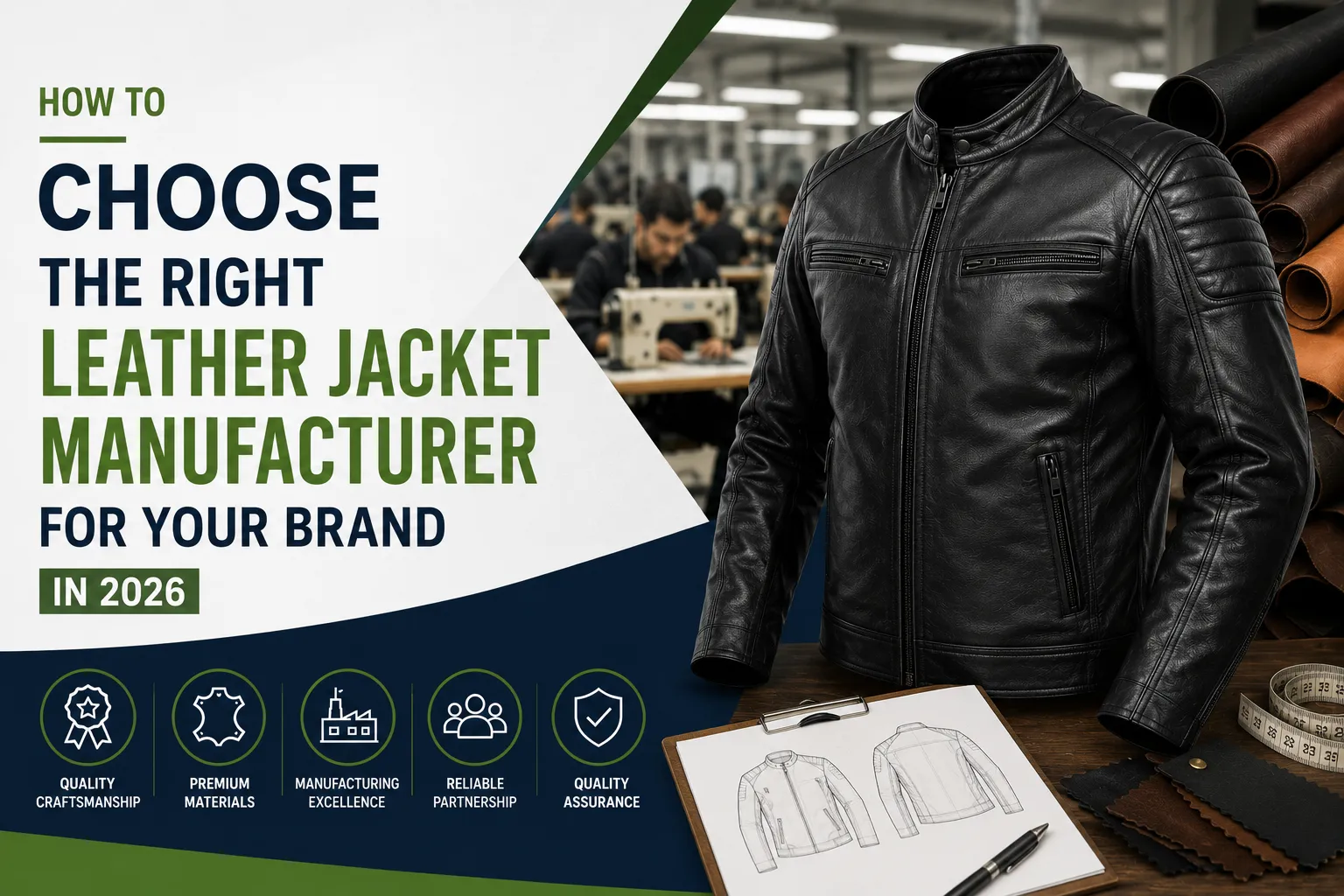
If you are planning to launch a leather jacket brand, expand your existing product range, source inventory for retail stores, or import leather jackets in bulk, one of the biggest decisions you will make is choosing the right manufacturer.
At first glance, many manufacturers may appear similar. Most websites show attractive product photos, claim to offer high quality, and promise competitive pricing. However, once you start comparing suppliers in detail, you quickly realize that not all manufacturers operate at the same level.
The manufacturer you choose will have a direct impact on:
- Product quality
- Customer satisfaction
- Delivery timelines
- Profit margins
- Brand reputation
- Business growth
In simple terms, your manufacturer can either help your business grow or create problems that cost you time, money, and customers.
Many businesses focus only on finding the cheapest supplier. While lower prices may seem attractive initially, they often lead to bigger expenses later through product returns, quality issues, delayed deliveries, and unhappy customers.
The smartest brands focus on finding a manufacturing partner that delivers consistent quality, reliable service, and long-term support.
This guide will help you understand exactly how to evaluate a leather jacket manufacturer and avoid common sourcing mistakes in 2026.
Why Choosing the Right Manufacturer Is More Important Than Ever
The leather jacket market has become increasingly competitive over the last few years.
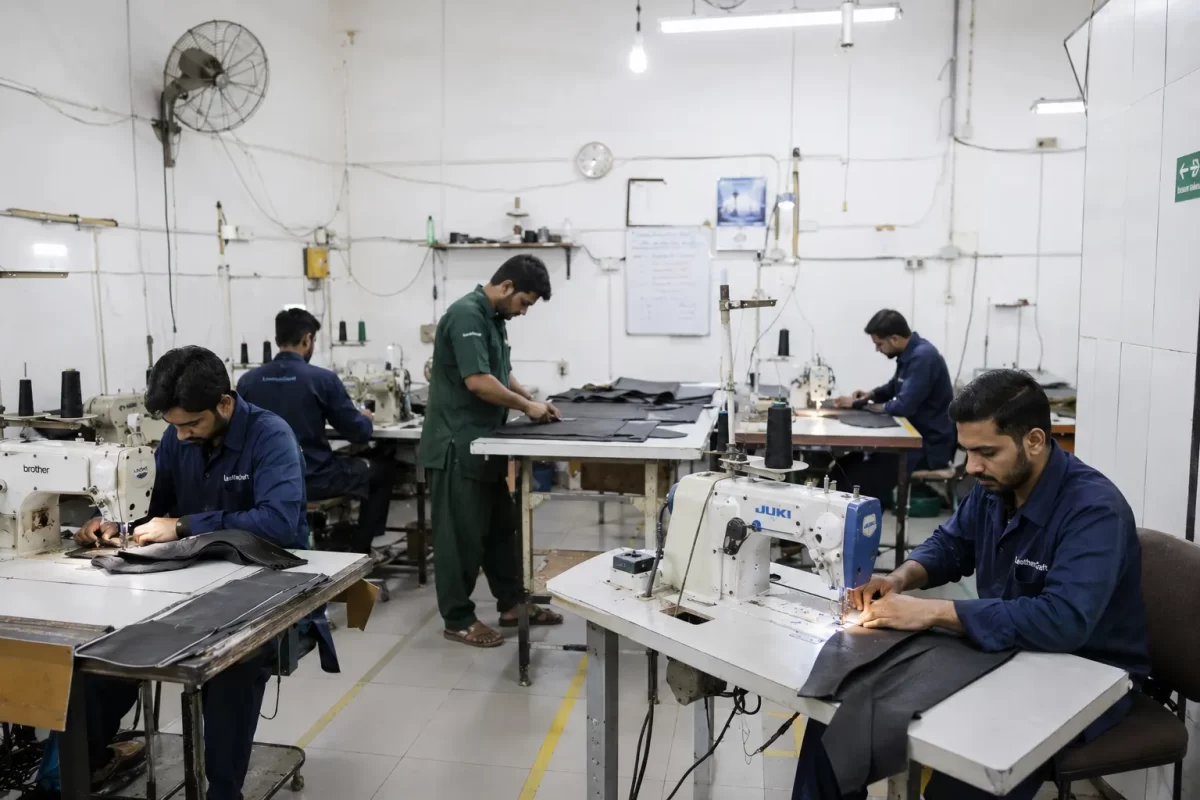
Whether you sell through:
- Your own online store
- Amazon
- Retail shops
- Wholesale networks
- Fashion boutiques
- Motorcycle gear stores
your customers have more choices than ever before.
Because competition is higher, customer expectations are also higher.
Today’s customers compare products carefully before making a purchase.
They expect:
| Customer Expectation | Why It Matters |
| Premium Appearance | Creates a positive first impression |
| Quality Materials | Increases perceived value |
| Durable Construction | Reduces complaints and returns |
| Accurate Sizing | Improves customer satisfaction |
| Professional Packaging | Enhances brand image |
| Fast Delivery | Meets modern expectations |
If your jackets fail to meet these expectations, customers may simply buy from another brand next time.
This is why your manufacturing partner plays such a critical role.
A Manufacturer Is More Than Just a Factory
Many people think a manufacturer simply makes products.
In reality, a good manufacturer becomes an important part of your business.
Think about it this way.
When a customer buys a leather jacket from your brand, they do not know who manufactured it.
They only know your company.
If the jacket arrives with:
- Poor stitching
- Wrong sizing
- Damaged zippers
- Low-quality leather
- Delayed delivery
the customer blames your brand, not the factory.
This means every manufacturing mistake eventually becomes your problem.
That is why successful brands spend considerable time evaluating suppliers before placing orders.
Before Contacting Manufacturers, Define Your Requirements
One of the biggest mistakes businesses make is contacting factories without knowing exactly what they need.
This usually results in:
- Confusing quotations
- Inaccurate pricing
- Poor supplier comparisons
- Production misunderstandings
Before reaching out to manufacturers, clarify your requirements.
What Type of Leather Jacket Do You Want to Sell?
Different manufacturers often specialize in different products.
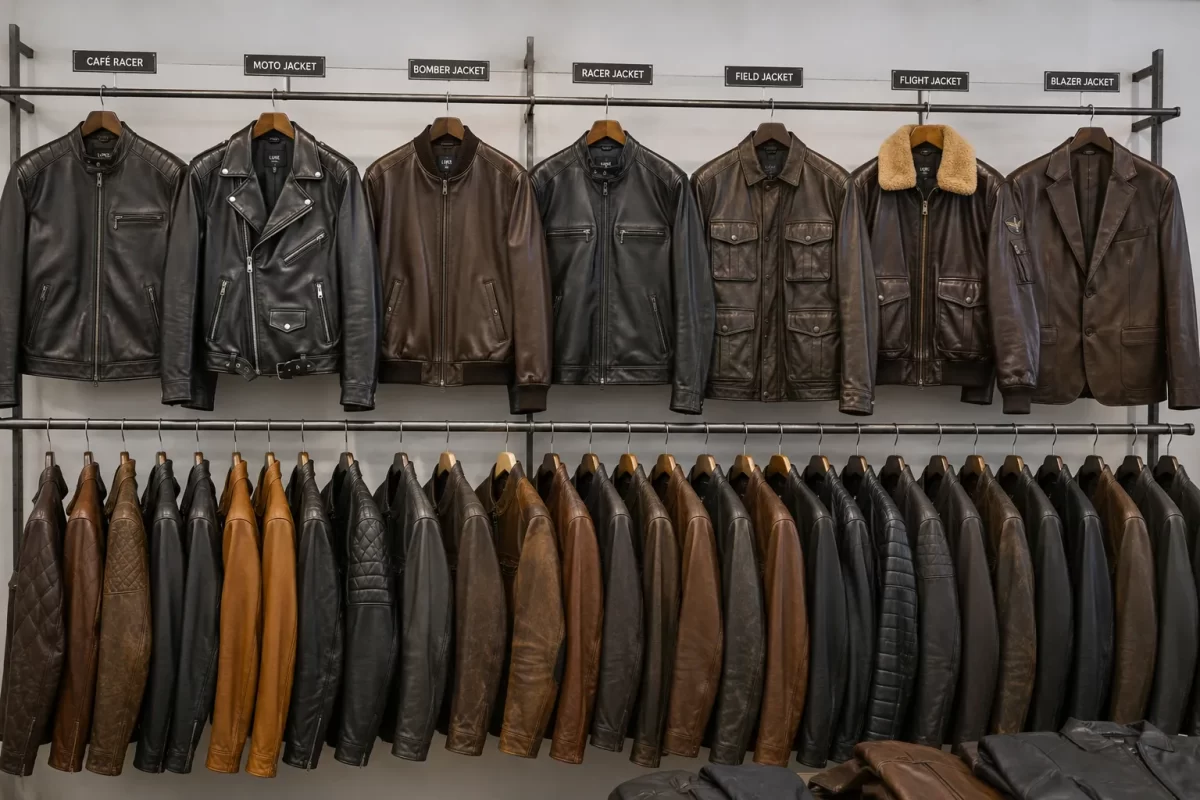
Some focus on fashion jackets.
Others focus on motorcycle apparel.
Some specialize in luxury leather garments.
Others focus on large-volume retail production.
Common Leather Jacket Categories
| Jacket Category | Typical Market |
| Biker Jackets | Fashion & Motorcycle |
| Cafe Racer Jackets | Premium Fashion |
| Bomber Jackets | Lifestyle Brands |
| Fashion Jackets | Retail Stores |
| Motorcycle Jackets | Riding Gear Brands |
| Vintage Jackets | Heritage Fashion |
| Streetwear Jackets | Modern Fashion Brands |
Understanding your product category helps you identify manufacturers with relevant expertise.
Who Is Your Target Customer?
Your target market will influence almost every manufacturing decision.
For example:
A luxury fashion brand may prioritize:
- Premium lambskin
- Luxury lining
- Custom hardware
- Detailed finishing
A motorcycle apparel brand may prioritize:
- Heavy-duty cowhide
- CE protection compatibility
- Abrasion resistance
- Functional design
The right manufacturer should understand the needs of your specific market.
What Price Range Are You Targeting?
Your retail price determines the level of materials and construction required.
Typical Market Segments
| Market Segment | Typical Retail Price |
| Entry-Level | $99 – $199 |
| Mid-Range | $200 – $400 |
| Premium | $400 – $800 |
| Luxury | $800+ |
A manufacturer producing luxury jackets may not be suitable for budget-focused products.
Likewise, a low-cost factory may struggle to meet premium quality expectations.
10 Essential Factors to Evaluate Before Choosing a Leather Jacket Manufacturer
1. Manufacturing Experience
Experience matters because leather jackets are significantly more complex than ordinary apparel.
Leather behaves differently than cotton, polyester, or other fabrics.
It requires:
- Specialized cutting techniques
- Skilled stitching
- Careful handling
- Material knowledge
- Finishing expertise
An experienced manufacturer has likely encountered and solved many production challenges already.
Questions You Should Ask
| Question | Why It Matters |
| How long have you been manufacturing leather jackets? | Indicates expertise |
| Which countries do you export to? | Shows international experience |
| What products do you specialize in? | Confirms focus area |
| Can you share production examples? | Verifies capability |
Generally speaking, manufacturers with years of leather jacket experience are better equipped to handle complex projects.
2. Leather Knowledge and Material Expertise
Leather is one of the most important components of the final product.
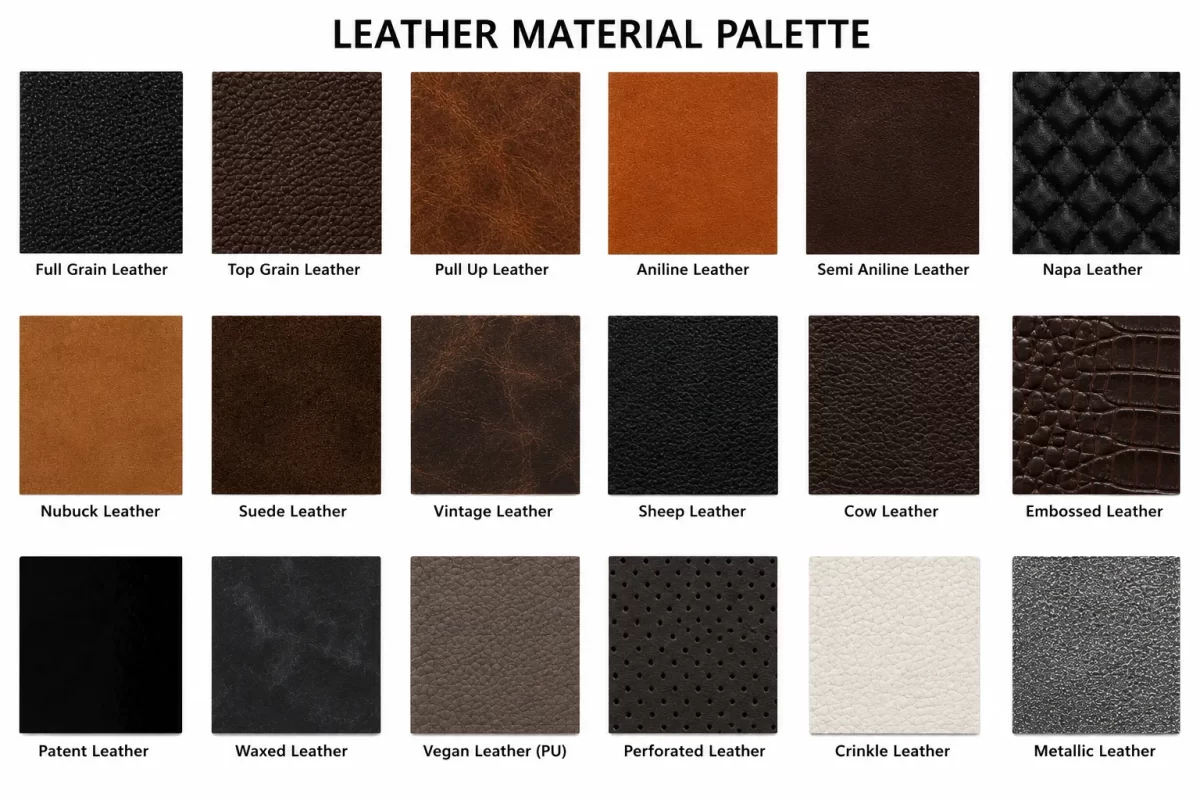
The quality of leather influences:
- Durability
- Comfort
- Appearance
- Customer satisfaction
- Product lifespan
A professional manufacturer should educate you about available leather options instead of simply taking your order.
Common Leather Types
| Leather Type | Characteristics |
| Cowhide | Strong and durable |
| Sheepskin | Soft and lightweight |
| Goatskin | Premium texture and durability |
| Buffalo Leather | Rugged appearance |
| Lambskin | Luxury feel and softness |
A knowledgeable supplier should explain the pros and cons of each material based on your goals.
3. Product Quality Standards
Product quality is often the biggest concern when sourcing internationally.
Never rely solely on photos.
Always request physical samples.
During evaluation, carefully inspect:
Sample Inspection Checklist
| Area | What to Check |
| Stitching | Straight and consistent |
| Leather | Uniform appearance |
| Hardware | Strong zippers and snaps |
| Lining | Properly installed |
| Measurements | Accurate sizing |
| Finishing | Clean workmanship |
Small defects in a sample often indicate larger issues in bulk production.
4. Private Label and Custom Branding Capabilities
Most growing brands want products that reflect their own identity.
This is where private labeling becomes important.
Branding Features to Look For
| Feature | Benefit |
| Woven Labels | Brand recognition |
| Printed Labels | Professional appearance |
| Hang Tags | Retail presentation |
| Custom Packaging | Stronger brand image |
| Embroidery | Product differentiation |
| Custom Hardware | Unique product identity |
The more customization options available, the easier it becomes to build a recognizable brand.
5. Sampling Process
The sample stage often reveals how the manufacturer will handle future production.
Pay attention to:
- Communication quality
- Sample accuracy
- Response speed
- Willingness to make revisions
- Attention to detail
Typical Sampling Process
| Step | Description |
| Design Submission | Share requirements |
| Material Selection | Choose leather and trims |
| Sample Development | Initial prototype creation |
| Review and Feedback | Adjustments and improvements |
| Final Approval | Ready for bulk production |
A structured sampling process reduces risk and improves production outcomes.
6. Minimum Order Quantity (MOQ)
MOQ determines the minimum number of units you must order.
This directly affects inventory investment and financial risk.
Typical MOQ Levels
| Manufacturer Type | MOQ |
| Startup-Friendly | 30 – 100 Pieces |
| Medium Factory | 100 – 300 Pieces |
| Large Factory | 300 + Pieces |
For newer brands, lower MOQs provide flexibility and easier market testing.
7. Production Capacity
Many businesses think only about today’s requirements.
Smart businesses think about future growth.
Imagine your leather jacket collection becomes successful and demand triples.
Can your manufacturer handle larger orders?
Questions to Ask
| Question | Reason |
| Monthly production capacity? | Measures scalability |
| Number of production lines? | Indicates resources |
| Peak season capacity? | Prevents future delays |
| Repeat order capability? | Supports growth |
A manufacturing partner should be capable of growing alongside your business.
8. Lead Times and Delivery Reliability
Late deliveries can create major business problems.
Especially if you:
- Sell seasonal collections
- Supply retail stores
- Serve wholesale customers
- Launch limited editions
Typical Production Timeline
| Stage | Duration |
| Sample Development | 2 – 4 Weeks |
| Material Sourcing | 2 – 3 Weeks |
| Bulk Production | 4 – 8 Weeks |
| Quality Inspection | 1 Week |
| Shipping | Depends on Destination |
Impact of Late Deliveries
| Issue | Result |
| Missed Launches | Lost revenue |
| Empty Inventory | Lost customers |
| Delayed Wholesale Orders | Damaged relationships |
| Seasonal Delays | Reduced profitability |
Reliable delivery often matters more than slightly cheaper pricing.
9. Quality Control Systems
Strong quality control protects your investment.
Without proper inspections, mistakes may go unnoticed until products reach customers.
Important Quality Control Stages
| Stage | Purpose |
| Material Inspection | Verify incoming materials |
| In-Line Inspection | Detect issues during production |
| Measurement Verification | Confirm sizing accuracy |
| Final Inspection | Check finished products |
| Packaging Inspection | Prevent shipping errors |
Ask manufacturers to explain their quality control procedures in detail.
10. Communication and Responsiveness
Poor communication causes many sourcing problems.
Even a skilled manufacturer can become difficult to work with if communication is inconsistent.
Signs of Good Communication
| Good Sign | Why It Matters |
| Quick Responses | Faster decision-making |
| Clear Answers | Fewer misunderstandings |
| Regular Updates | Better project management |
| Transparency | Stronger trust |
| Problem-Solving Attitude | Easier collaboration |
Many experienced importers consider communication just as important as product quality.
Red Flags That Should Not Be Ignored
Certain warning signs deserve attention.
Common Supplier Red Flags
| Red Flag | Potential Risk |
| Extremely Low Prices | Quality compromises |
| No Sample Process | Higher production risk |
| Slow Responses | Future delays |
| No Factory Photos | Limited transparency |
| Unclear Pricing | Hidden costs |
| Unrealistic Lead Times | Missed deadlines |
| No Quality Control Information | Higher defect rates |
If multiple warning signs appear, it may be wise to continue your search.
Simple Manufacturer Comparison Scorecard
Use this scorecard when comparing suppliers.
| Evaluation Area | Score (1 – 10) |
| Product Quality | |
| Leather Expertise | |
| Communication | |
| MOQ Flexibility | |
| Lead Times | |
| Private Label Services | |
| Pricing Transparency | |
| Quality Control | |
| Production Capacity | |
| Export Experience |
This simple framework helps you make objective decisions instead of relying on assumptions.
Why Many Brands Source Leather Jackets from Pakistan
Pakistan has established itself as a major leather garment manufacturing hub.
Key Reasons
| Advantage | Business Benefit |
| Skilled Workforce | Better craftsmanship |
| Competitive Costs | Improved profit margins |
| Leather Industry Experience | Strong technical knowledge |
| Export Expertise | Easier international trade |
| Flexible MOQs | Suitable for growing brands |
| Private Label Services | Brand-building opportunities |
For many international businesses, Pakistan offers a balance of quality, flexibility, and value.
How Sialkot Jackets Star Supports Leather Jacket Brands
At Sialkot Jackets Star, we understand that sourcing jackets involves more than simply placing an order.
Businesses need a manufacturing partner that understands quality, timelines, communication, and brand development.
Our capabilities include:
- OEM leather jacket manufacturing
- Private label production
- Custom design development
- Leather sourcing assistance
- Sample development
- Bulk manufacturing
- Quality control inspections
- Export documentation
- Worldwide shipping support
Whether you are launching your first collection or expanding an existing brand, our goal is to help simplify the manufacturing process while maintaining consistent quality standards.
Conclusion
Choosing the right leather jacket manufacturer is one of the most important investments you can make for your brand.
A good manufacturing partner helps you:
- Deliver better products
- Reduce customer complaints
- Improve profit margins
- Scale production confidently
- Build long-term brand value
Instead of focusing only on price, evaluate manufacturers based on quality, experience, communication, production capability, private label services, and reliability.
The right partner can help your brand grow for years. The wrong partner can create challenges that are difficult and expensive to overcome.
Take your time, compare suppliers carefully, request samples, and choose a manufacturer that aligns with your long-term business goals.