

One of the first conversations we have with new buyers usually starts with a simple question:
“How much will it cost to manufacture my leather jackets?”
It’s an important question, but it’s also one of the most difficult to answer without understanding the product itself.
A leather jacket isn’t a standard product with a fixed manufacturing price.
Every decision you make from the type of leather and jacket construction to the hardware, branding, and order quantity changes the overall production cost.
This is why you may receive two completely different quotations for jackets that appear almost identical in photographs.
One manufacturer may be pricing a jacket made with premium lambskin, branded YKK zippers, custom woven labels, and individually inspected finishing, while another may be quoting a similar-looking jacket built with different materials and specifications.
On paper, both products are called “leather jackets.”
In reality, they’re completely different products designed for different markets.
That’s why comparing quotations without understanding what you’re actually paying for often leads to poor sourcing decisions.
The objective shouldn’t be to find the lowest manufacturing price.
The objective should be to understand where your investment creates value for your customers and where you can optimize costs without reducing product quality.
In this guide, we’ll explain the key factors that influence leather jacket manufacturing costs and share the same considerations we discuss with buyers before production begins.
Whether you’re launching your first private label collection or expanding an existing product line, understanding these factors will help you make more informed manufacturing decisions.
Before You Compare Manufacturing Prices, Understand What You’re Actually Paying For
One mistake we frequently see is buyers requesting quotations from multiple manufacturers and comparing only the final price.
While that approach seems logical, it rarely provides a complete picture.
Manufacturing isn’t simply the process of stitching leather together.
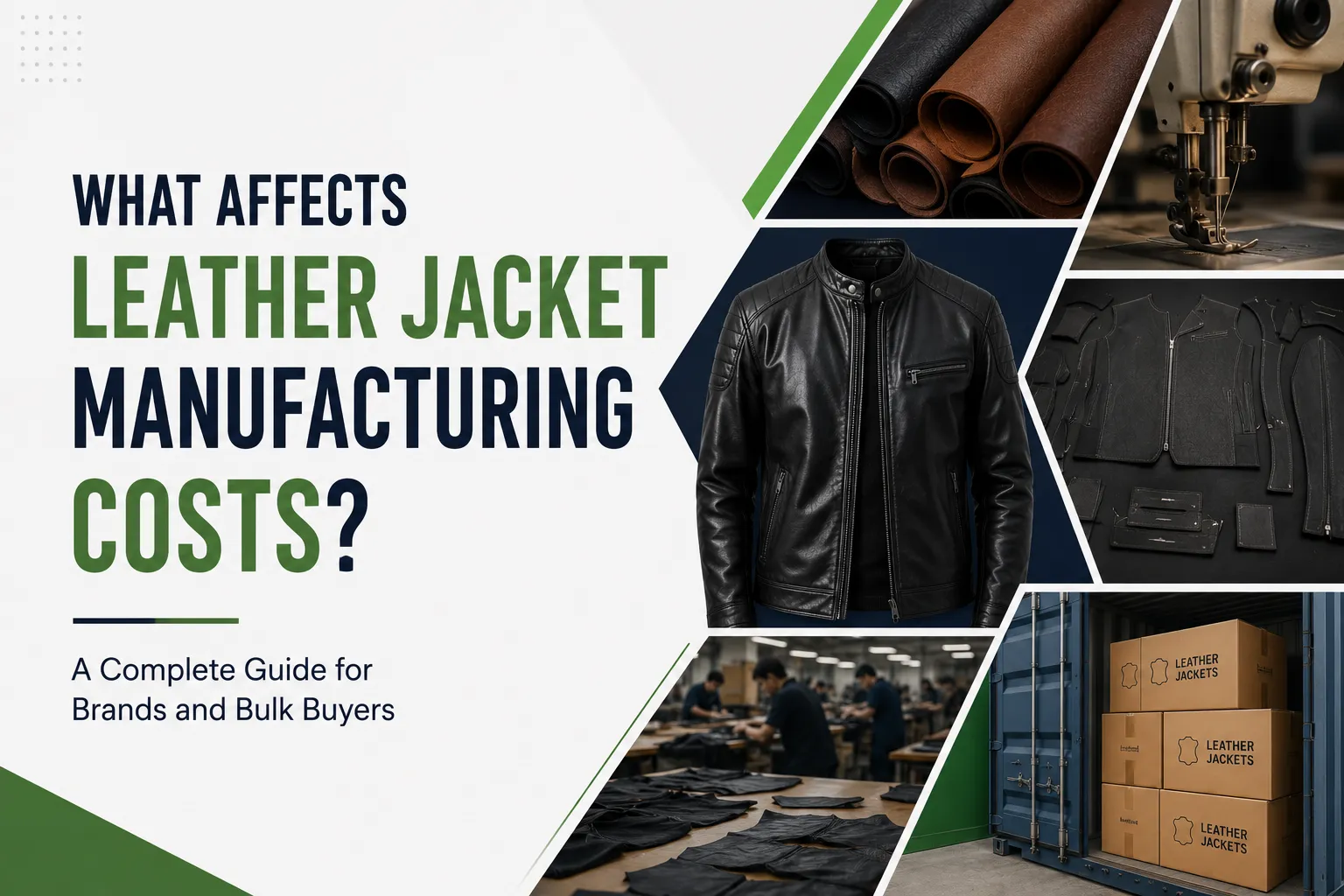
Every jacket represents the combined cost of materials, skilled labour, product development, quality control, sourcing, finishing, packaging, and export preparation.
When one quotation is lower than another, it doesn’t automatically mean you’ve found a better supplier.
It usually means something within the manufacturing process is different.
The table below illustrates the major components that contribute to the cost of manufacturing a leather jacket.
| Manufacturing Component | Why It Influences Cost |
| Leather | The quality, type, thickness, and finish of the leather have the greatest impact on manufacturing cost. |
| Product development | Creating patterns, samples, and production specifications requires time and technical expertise. |
| Skilled craftsmanship | Experienced workers produce cleaner stitching, better fitting garments, and more consistent quality. |
| Hardware and trims | Zippers, buttons, snaps, buckles, linings, and accessories vary significantly in quality and price. |
| Branding | Custom labels, patches, embroidery, and packaging all contribute to the overall production cost. |
| Quality control | Multiple inspections help reduce defects and improve consistency across bulk production. |
| Export preparation | Professional packing, documentation, and shipment preparation are essential for international orders. |
When you understand these individual cost components, quotations become much easier to evaluate.
Instead of asking,
“Why is this manufacturer more expensive?”
you’ll start asking,
“What additional value am I receiving for that price?”
That shift in thinking often leads to better sourcing decisions.
Leather Selection Has the Biggest Influence on Manufacturing Cost
If there’s one decision that affects your manufacturing budget more than any other, it’s your choice of leather.
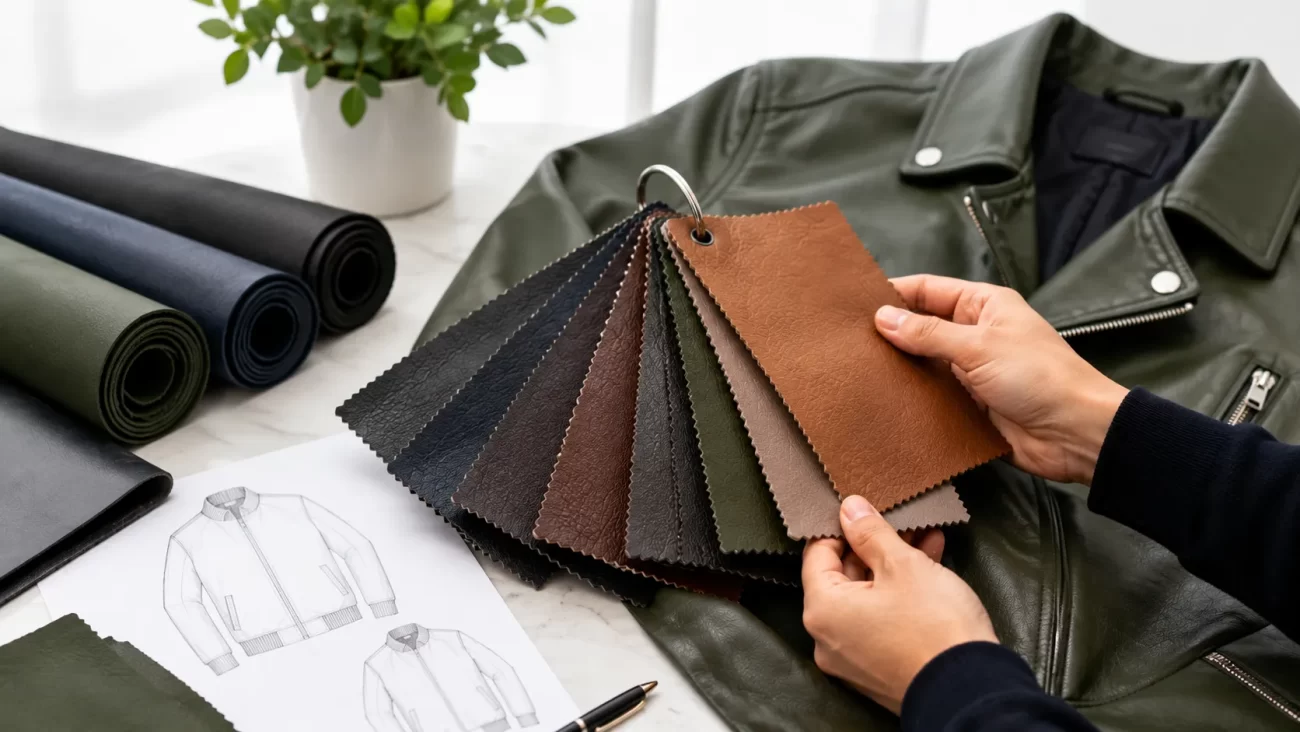
Many buyers assume leather is simply leather.
From a manufacturing perspective, that’s far from reality.
Different leather types have different characteristics, sourcing costs, production requirements, and market positioning.
The leather you choose doesn’t just affect your manufacturing cost.
It also influences:
- How your customers perceive your brand.
- The retail price your products can command.
- The comfort and durability of the finished jacket.
- Your long-term brand positioning.
For example, a premium fashion brand targeting luxury retailers will usually have very different material requirements than a motorcycle apparel brand focused on durability and protection.
Choosing the wrong leather can either increase your production costs unnecessarily or limit your ability to position your products in the market.
Here’s a simplified comparison.
| Leather Type | Relative Manufacturing Cost | Best Suited For | Brand Positioning |
| Lambskin | High | Luxury fashion collections | Premium and designer brands |
| Cowhide | Medium to High | Motorcycle jackets and rugged outerwear | Durability and performance |
| Goatskin | Medium | Lifestyle and everyday fashion | Balanced comfort and durability |
| Buffalo Leather | Medium to High | Heritage and outdoor collections | Rugged premium products |
It’s important to understand that leather type is only one part of the equation.
Within each category, different grades, finishes, thicknesses, and treatments can further influence manufacturing costs.
This is why experienced manufacturers spend time discussing your target market before recommending materials.
The goal isn’t simply to use the most expensive leather.
The goal is to select the leather that supports your brand positioning while keeping your production investment commercially viable.
If you’re still evaluating which material best suits your collection, we recommend reading our guide on Best Leather Types for Premium Jacket Brands, where we explain how different leather options influence customer experience, pricing strategy, and brand perception.
Don’t Pay for Features Your Customers Don’t Value
One lesson we’ve learned from working with international brands is that higher manufacturing costs don’t automatically create better products.
The best products are the ones that match the expectations of your target customers.
For example, if your customers are looking for premium everyday leather jackets, investing heavily in features they’ll never notice may simply increase your production cost without improving your sales.
On the other hand, if you’re targeting luxury boutiques, cutting costs on leather quality or hardware can weaken your brand’s positioning and make it more difficult to justify premium retail pricing.
Before making any material or construction decision, ask yourself one question:
“Will this feature create additional value for my customer?”
If the answer is yes, it’s often a worthwhile investment.
If the answer is no, it may be an opportunity to optimize your manufacturing cost without affecting the overall customer experience.
This approach helps brands allocate their budgets more strategically and build products that are commercially competitive rather than simply expensive.
In the next section, we’ll explore how jacket design complexity, hardware selection, branding requirements, and production quantities further influence manufacturing costs and where experienced brands often find opportunities to improve efficiency without compromising quality.
Jacket Design Complexity Can Increase or Reduce Your Manufacturing Cost
After selecting the leather, the next factor that has a significant impact on manufacturing cost is the jacket’s design.
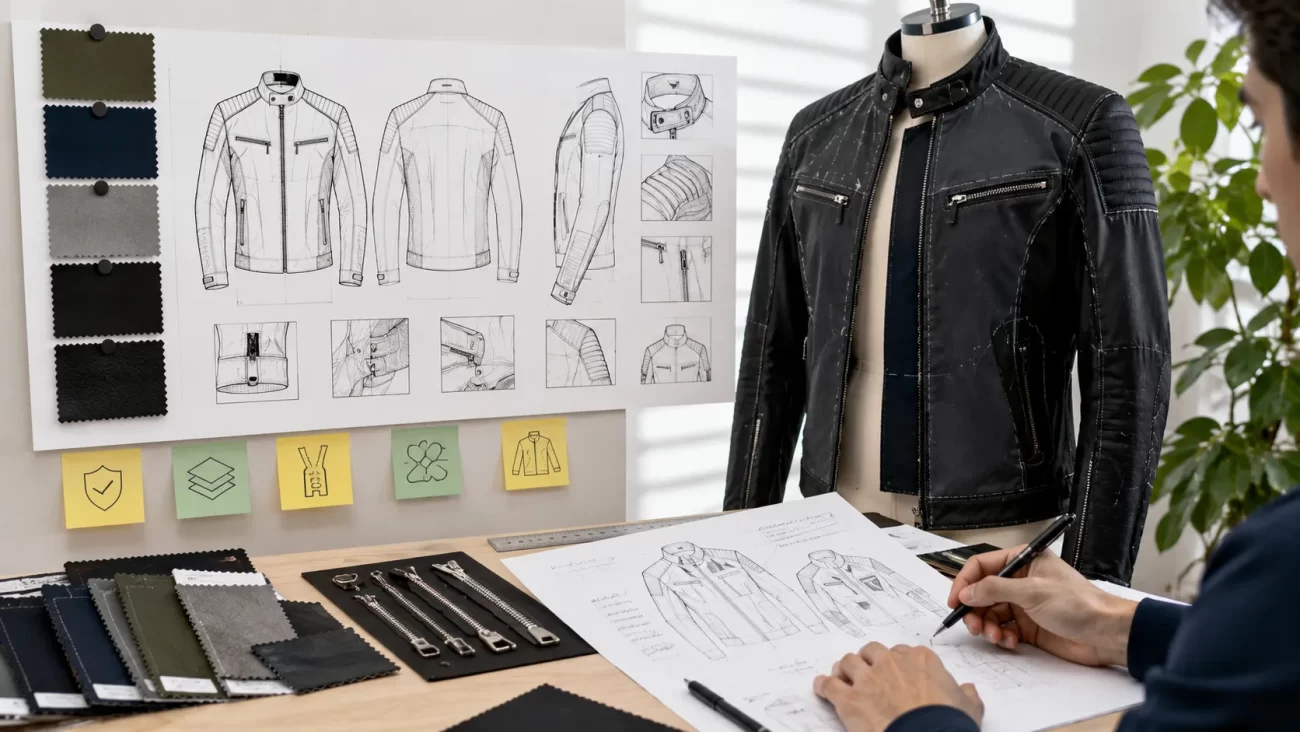
This is where many buyers unintentionally increase their production costs.
A jacket may look simple in a product photo, but from a manufacturer’s perspective, every additional panel, pocket, stitch line, and construction detail adds time to the production process.
Time is one of the biggest cost drivers in garment manufacturing.
The more complex the design, the more skilled labour, cutting accuracy, sewing operations, and quality inspections are required.
That doesn’t mean you should avoid detailed designs.
It means every design element should have a purpose.
Ask yourself:
“Does this feature improve functionality, customer experience, or my brand image?”
If the answer is yes, it’s likely worth the investment.
If not, simplifying the design can often reduce manufacturing costs without changing how customers perceive the finished product.
| Design Feature | Impact on Manufacturing Cost | Why It Increases Cost |
| Clean, minimal design | Low | Fewer production operations and faster assembly. |
| Multiple body panels | Medium to High | Requires more cutting precision and sewing time. |
| Quilted sections | High | Additional stitching, padding, and labour. |
| Decorative stitching | Medium | More machine time and skilled workmanship. |
| Multiple zippered pockets | Medium to High | Additional materials and production steps. |
| Removable components | High | More pattern development and assembly work. |
| Complex sleeve construction | Medium | Increases sewing precision and production time. |
One piece of advice we often share with new brands is this:
Don’t try to include every possible feature in your first collection.
Customers usually remember the quality, fit, and overall finish of a jacket far more than the number of decorative details it includes.
Hardware and Trims: Small Components That Make a Big Difference
When buyers calculate manufacturing costs, their attention usually goes straight to the leather.
But some of the most noticeable quality differences come from the smallest components.
A zipper that operates smoothly after years of use.
Metal snaps that close securely every time.
A lining that feels comfortable instead of stiff.
These details shape the customer’s experience every time they wear the jacket.
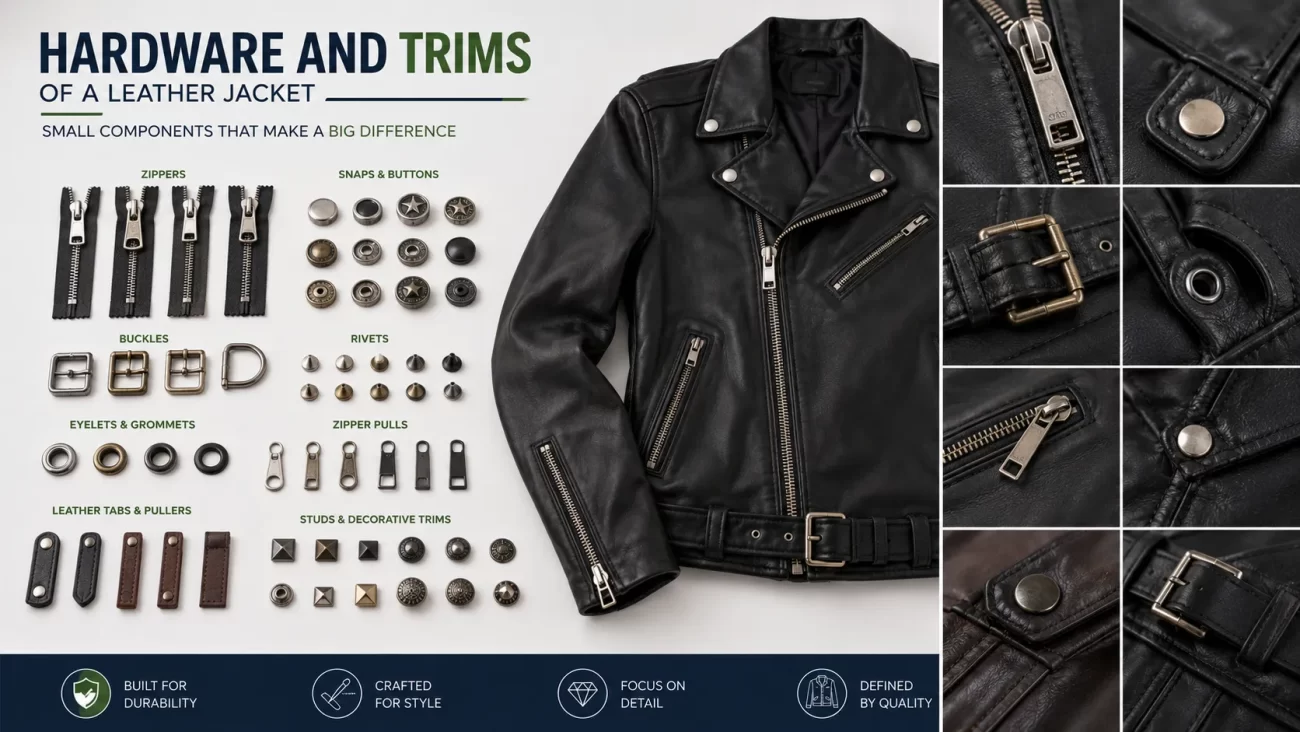
Premium hardware naturally costs more than standard alternatives, but it also contributes to better durability, fewer product issues, and stronger customer satisfaction.
The same applies to linings, rib-knit cuffs for bomber jackets, drawcords, buckles, rivets, and other trims.
Rather than asking for the least expensive components, decide what level of quality your target market expects.
If you’re positioning your brand as premium, your hardware should reinforce that promise.
Your Branding Requirements Also Influence Production Costs
Private label manufacturing is about much more than placing your logo on a jacket.
Every branding element is produced separately and becomes part of your manufacturing cost.
The advantage is that these details help transform a generic product into one that customers immediately recognize as your brand.
Common branding options include:
- Woven neck labels.
- Printed care labels.
- Custom hang tags.
- Logo-embossed leather patches.
- Embroidered logos.
- Custom packaging.
- Branded poly bags.
- Printed cartons for wholesale distribution.
| Branding Element | Adds to Manufacturing Cost | Value for Your Brand |
| Woven labels | Yes | Builds long-term brand recognition. |
| Custom hang tags | Yes | Creates a more professional retail presentation. |
| Logo embossing | Yes | Enhances perceived product quality. |
| Embroidery | Yes | Adds a premium branded appearance. |
| Custom packaging | Yes | Improves the customer’s unboxing experience. |
One common misconception is that branding is simply an extra expense.
In reality, it’s an investment in your business identity.
A customer may remove the hang tag after purchase, but the overall presentation influences their perception of your brand before they even try the jacket on.
If you’re planning to build your own label, our guide Private Label Leather Jacket Manufacturing: From Design Concept to Bulk Production explains how branding is integrated into the production process from the very beginning.
Order Quantity Has a Bigger Impact Than Most Buyers Expect
Another factor that significantly affects manufacturing cost is your order quantity.
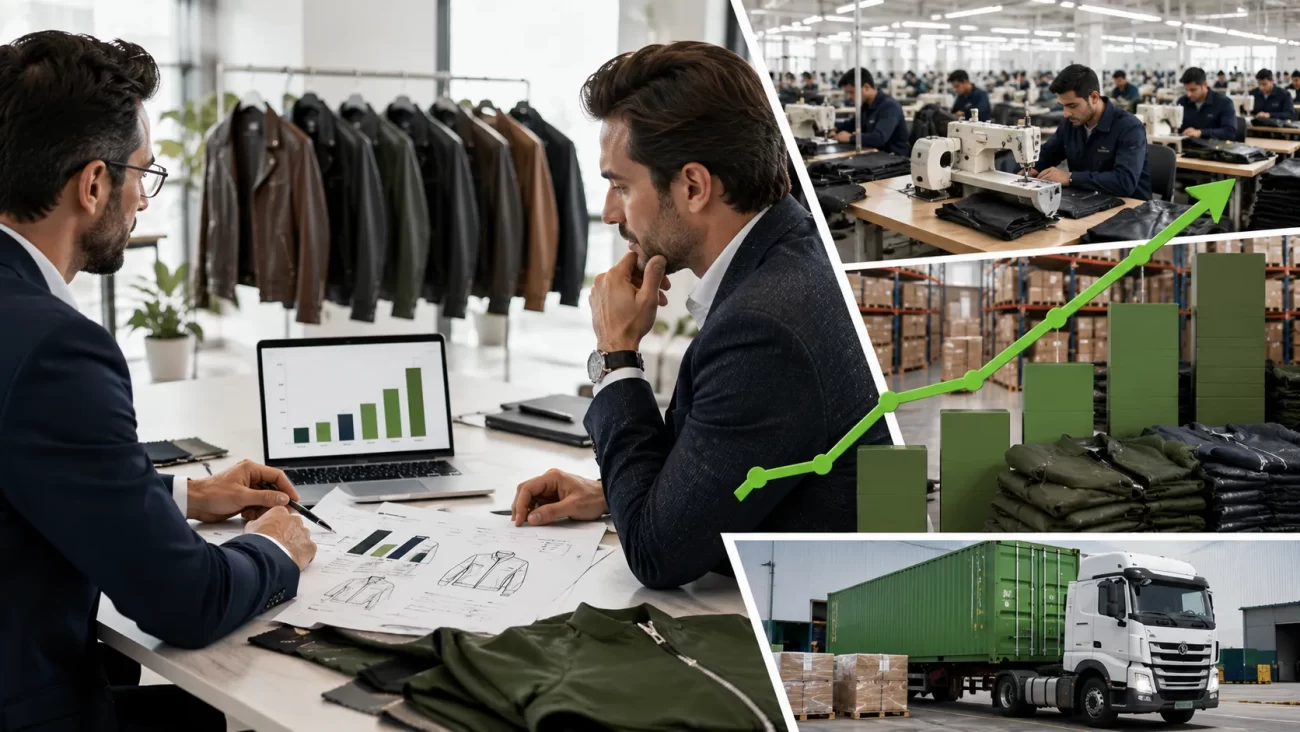
Every production run includes fixed preparation costs.
Patterns must be prepared.
Leather must be sourced.
Machines need to be set up.
Production planning has to be completed.
Whether you’re manufacturing one jacket or one thousand, many of these preparation steps remain the same.
As production volume increases, those fixed costs are distributed across more units.
That’s why larger production runs usually result in lower manufacturing costs per jacket.
| Production Quantity | Typical Manufacturing Cost Per Jacket |
| Product sample | Highest |
| Small production run | Higher |
| Medium bulk order | Moderate |
| Large-scale production | Lower |
This doesn’t mean every brand should place the largest possible order.
Instead, choose an order quantity that balances your inventory plans, available budget, and expected sales volume.
A well-planned production schedule is usually more valuable than simply manufacturing the highest number of jackets possible.
Product Sampling Is an Investment, Not an Extra Expense
Some buyers see sampling as an unnecessary cost.
We see it differently.
Sampling is where potential problems are identified before they become expensive production mistakes.
During sample development, you have the opportunity to evaluate:
- Fit and sizing.
- Leather selection.
- Stitching quality.
- Hardware choices.
- Branding placement.
- Overall construction.
- Customer experience.
Making adjustments during sampling is relatively straightforward.
Making those same changes after bulk production has started can be expensive and time-consuming.
That’s why we encourage buyers to treat product sampling as part of the product development process rather than an optional step.
How Experienced Brands Control Manufacturing Costs Without Sacrificing Quality
Reducing manufacturing costs doesn’t always mean choosing cheaper materials.
In many cases, it means making smarter decisions before production begins.
Here are some strategies we’ve seen successful brands use consistently.
| Strategy | Long-Term Benefit |
| Finalize designs before sampling | Fewer revisions and reduced development costs. |
| Select leather based on your target market | Avoids unnecessary material expenses. |
| Standardize hardware across multiple styles | Simplifies sourcing and improves purchasing efficiency. |
| Plan bulk production in advance | Better scheduling and production efficiency. |
| Build a long-term manufacturing relationship | Improves consistency, communication, and overall cost management. |
The most successful brands don’t try to reduce every cost.
They focus on investing where customers notice the difference and simplifying areas that don’t add meaningful value.
Planning Your Leather Jacket Collection? Let’s Build It the Right Way.
Whether you’re developing your first private label collection or expanding an established brand, understanding manufacturing costs is only the first step.
The next step is working with a manufacturing partner who can help you make informed decisions before production begins.
At Sialkot Jackets Star, we work with importers, wholesalers, distributors, retailers, and private label brands across international markets.
Our team helps buyers:
- Choose the right leather for their target market.
- Review designs for manufacturing efficiency.
- Develop production-ready samples.
- Customize branding and private label elements.
- Plan cost-effective bulk production.
- Coordinate export documentation and international shipping.
If you’re ready to move from concept to production, we’d be happy to discuss your project.
Whether you already have detailed tech packs or just an initial idea, we can help you turn it into a production-ready leather jacket collection.
Get in touch with our team to:
- Request a production sample.
- Discuss your OEM or private label requirements.
- Receive a customized quotation for bulk manufacturing.
- Explore the most suitable production options for your brand.
Frequently Asked Questions
Leather selection typically has the greatest impact because different leather types, grades, thicknesses, and finishes vary significantly in cost. However, design complexity, hardware, branding, and order quantity also play major roles.
The jackets may appear similar, but differences in leather quality, hardware, stitching standards, construction methods, quality control, branding, and production processes can result in very different manufacturing costs.
In most cases, yes. Larger production runs spread fixed setup and development costs across more units, making bulk manufacturing more cost-efficient than small production batches.
Absolutely. Sampling allows you to evaluate fit, materials, construction, and branding before bulk production begins. It helps identify issues early, reducing the risk of costly changes later.
Yes. Optimizing design complexity, standardizing trims, planning production in advance, and choosing materials that match your target market are all effective ways to improve cost efficiency while maintaining quality.
Understanding leather jacket manufacturing costs isn’t about finding the lowest quotation it’s about understanding what creates value for your business and your customers.
Every decision, from leather selection and design to branding and production planning, influences not only your manufacturing budget but also your product quality, brand positioning, and customer satisfaction.
When you understand these cost drivers before placing an order, you’re in a much stronger position to compare quotations, make informed sourcing decisions, and build a collection that supports long-term growth.
To continue planning your sourcing journey, we also recommend reading these related guides:
- Best Leather Types for Premium Jacket Brands: Learn how material selection influences customer experience and retail positioning.
- Private Label Leather Jacket Manufacturing: From Design Concept to Bulk Production: Explore the complete process of developing your own branded collection.
- Top Questions to Ask Before Hiring a Leather Jacket Manufacturer: Evaluate manufacturing partners beyond pricing alone.
- Custom Leather Jacket Manufacturing vs Ready-Made Wholesale Jackets: Which Is More Profitable? Compare sourcing models before making your next investment.
- FOB vs CIF Shipping for Leather Jacket Imports: Understand how shipping terms affect your overall importing costs and responsibilities.
Building a successful leather jacket brand starts with informed decisions. The better you understand the manufacturing process, the more confidently you can invest in products that strengthen your reputation and create long-term value for your customers.